
Solo travel in Nepal often gets unfairly boxed into two extremes: either squeezing onto a dusty 10-hour local bus with a battered backpack, or spending two grueling weeks trekking above 5,000 meters to Everest Base Camp.
While Nepal certainly earns its reputation as a trekker’s paradise, that narrow picture overlooks one of the country’s greatest strengths.
Nepal is one of the most welcoming, visually dramatic, and deeply rewarding destinations in Asia for independent travelers who want iconic Himalayan scenery, living medieval heritage, and close-up wildlife encounters—without roughing it or sacrificing comfort and safety.
You do not need mountaineering boots, a travel partner, or a month of vacation leave to experience the best of the country.
With smart routing and private local support, a single 10-day circuit lets you fly eye-level past Mount Everest before breakfast, walk through centuries-old royal courtyards in Kathmandu Valley, wake up to 360-degree mountain sunrises in Nagarkot, wander the car-free stone lanes of Bandipur, unwind beside Pokhara’s Phewa Lake, and track wild one-horned rhinos through Chitwan National Park.
Whether you are organizing your very first international trip alone or adding the Himalayas to a seasoned travel list, here is how to plan solo travel in Nepal safely, comfortably, and entirely at your own pace.
Why This 10-Day Circuit Is Ideal for Solo Travel in Nepal
When traveling alone in a mountainous country with winding highways and scattered heritage zones, day-to-day logistics can quickly eat into your vacation. Many independent visitors lose two or three full days just coordinating domestic flight reschedules, negotiating with unfamiliar drivers, queuing for separate monument permits, and vetting trustworthy safari operators.
Linking Kathmandu, Nagarkot, Bandipur, Pokhara, and Chitwan into one structured loop removes that friction and makes solo travel in Nepal feel effortless—delivering the widest geographic and cultural variety available in the country without a multi-day trek.
- Zero high-altitude sickness risk: You get front-row views of Mount Everest on a scenic morning flight, yet your feet stay at comfortable elevations throughout the trip. Kathmandu sits around 1,400 meters (4,600 ft), Pokhara at 822 meters (2,700 ft), and Chitwan National Park down in the subtropical lowlands at 150 meters (490 ft). Your highest overnight stay is Nagarkot at 2,175 meters (7,135 ft)—well below the threshold where acute mountain sickness becomes a concern.
- No grueling highway marathons: Driving straight from Kathmandu to Pokhara can take 7 to 9 bumpy hours depending on highway conditions—a draining haul when you are on your own. Breaking that overland stretch with an overnight stay in hilltop Bandipur keeps daily driving legs to a relaxed 4 to 5 hours, with flexible stops along the Trishuli River for fresh fruit, masala tea, and photos on suspension bridges.
- Built-in safety without losing your independence: Traveling on a private circuit gives you the best of both worlds. During the day, a licensed English-speaking guide, dedicated private driver, and vetted Chitwan jungle naturalist handle every route, ticket, and cultural introduction. In the evenings—especially in Kathmandu and Pokhara—your schedule opens up so you can read at a lakeside cafe, browse artisan shops, or dine wherever your mood takes you.
If you want every airport transfer, hotel, permit, and mountain flight coordinated seamlessly from the moment you land, the Everest Pokhara Chitwan tour package runs as a private itinerary even for a single traveler.
DIY Backpacking vs. a Private Guided 10-Day Circuit
When planning solo travel in Nepal, comparing a do-it-yourself backpacking trip against a private, pre-arranged 10-day circuit makes it much easier to choose the right fit for your time and comfort level.
| Travel Factor | DIY Solo Backpacking | Private Guided 10-Day Circuit |
|---|---|---|
| Intercity Transport | Fixed-schedule tourist buses with crowded highway stops and 7–9 hour travel days | Private air-conditioned sedan, SUV, or luxury vehicle with a dedicated driver and flexible stops |
| Everest Mountain Flight | Must monitor morning weather delays, rebookings, and early airport taxis alone | Pre-booked 1-hour flight with a guaranteed window seat, airport transfers, and weather coordination |
| Heritage & Park Permits | Navigating separate ticket counters across 7 UNESCO World Heritage sites and parks | All 7 UNESCO World Heritage entrance permits and Chitwan National Park fees pre-arranged |
| Route Pacing | Often skips Nagarkot overnight and bypasses medieval Bandipur entirely | Includes overnight stays in both Nagarkot and car-free Bandipur to keep travel days unhurried |
| Chitwan Safari Quality | Variable guide standards when booking last-minute street packages | Full-board stay at a vetted safari lodge with a dedicated licensed jungle naturalist |
| Evenings & Personal Space | Fully independent, including finding safe transport back after dark | Guided daytime exploration paired with free evenings in Kathmandu and Pokhara Lakeside |
For travelers with open-ended schedules and a strict backpacker budget, DIY travel is certainly doable. For anyone working with 10 days of annual leave who wants maximum scenery, rich local context, and zero logistical stress, a private guided circuit delivers far more value per day.
Your 10-Day Route for Solo Travel in Nepal: Region by Region
What truly sets solo travel in Nepal apart from other Asian destinations is how dramatically the landscape shifts every 48 hours. Within a single loop, you move from frozen 8,000-meter peaks to ancient red-brick temple squares, peaceful hill-station ridges, glacial lakes, and steamy jungle rivers.
1. Kathmandu & the Everest Mountain Flight: Roof of the World Before Breakfast
Few travel days anywhere on Earth match the contrast of your first full day in Nepal. Early in the morning, a private transfer takes you to Tribhuvan International Airport for a one-hour scenic mountain flight along the Himalayan crest.
Every passenger receives a guaranteed window seat, and flight crews typically invite passengers forward one by one into the cockpit for a pilot’s-eye panorama of Mount Everest, Lhotse, Makalu, and the surrounding snow walls. You experience the awe of Everest up close without spending two weeks acclimatizing on foot.
By mid-morning, you are back on the valley floor stepping straight into living history. The UNESCO World Heritage Kathmandu Valley encompasses seven historic monument zones, and exploring them with a licensed local guide transforms what could otherwise feel like a bustling maze of traffic and courtyards into a clear, unforgettable story. Your valley highlights include:
UNESCO World Heritage Centre
- Pashupatinath Temple: Nepal’s most sacred Hindu shrine dedicated to Lord Shiva, set along the banks of the Bagmati River where centuries-old rituals unfold daily.
- Boudhanath Stupa and Swayambhunath: Iconic Buddhist sanctuaries ringed by spinning prayer wheels, butter lamps, and rooftop cafes overlooking the valley.
- Kathmandu, Patan, and Bhaktapur Durbar Squares: Medieval royal plazas packed with intricately carved wooden struts, pagoda temples, and living Newari craft traditions—with Bhaktapur’s largely car-free brick squares standing out as an architectural highlight.
- Changu Narayan: A peaceful hilltop temple complex famed for ancient stonework and sweeping valley views far from the city bustle.
For a solo visitor, having a knowledgeable local guide here is invaluable. You learn the symbolism behind the woodcarvings, get trusted recommendations for traditional Newari lunches, and move through busy streets with total confidence.
2. Nagarkot Overnight: A 360-Degree Himalayan Sunrise Without the 3:00 AM Rush
Many standard Nepal tours treat Nagarkot as a rushed pre-dawn excursion—pulling travelers out of their Kathmandu hotel at 3:30 AM for a dark, winding drive up the ridge, followed by a quick photo stop and an immediate ride back down.
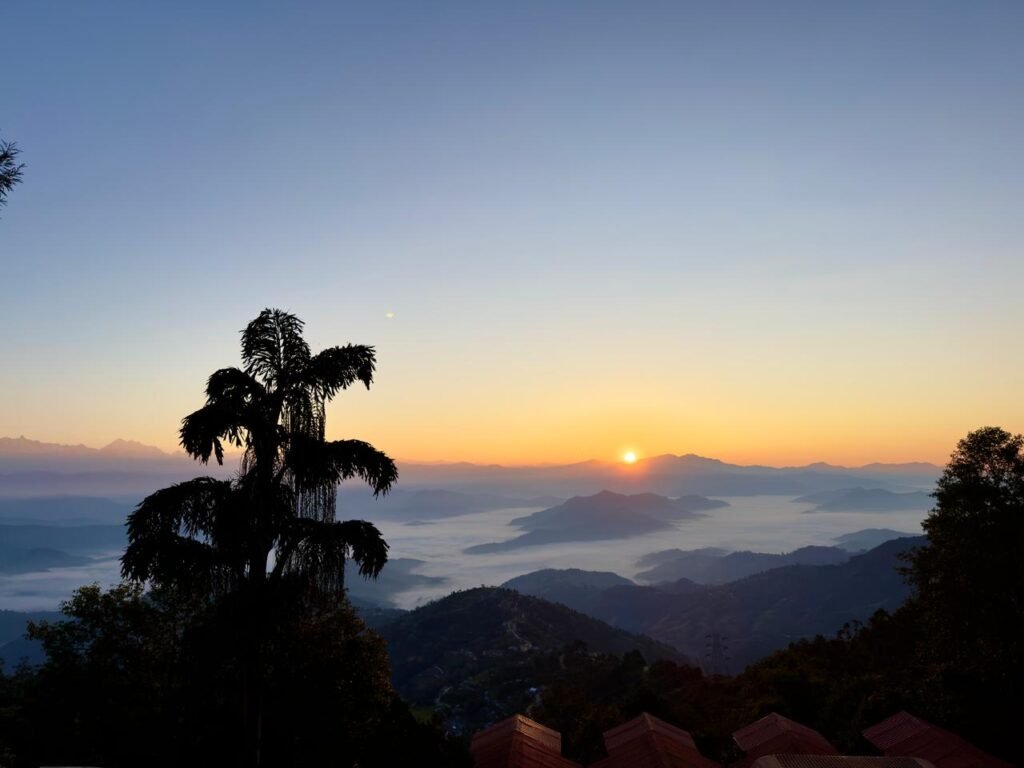
Staying overnight in Nagarkot (2,175m) changes the experience completely. You arrive in the crisp mountain air with time to settle into a ridge-top resort, watch late afternoon light fade across terraced hills, and enjoy a quiet dinner overlooking the valleys.
The next morning, you wake up naturally around 6:00 AM and step onto your balcony or terrace garden as first light turns the Himalayan range—including Langtang, Ganesh Himal, and on clear days, distant Everest—from deep indigo to molten gold.
3. Bandipur: A Car-Free Medieval Pause Between Valleys
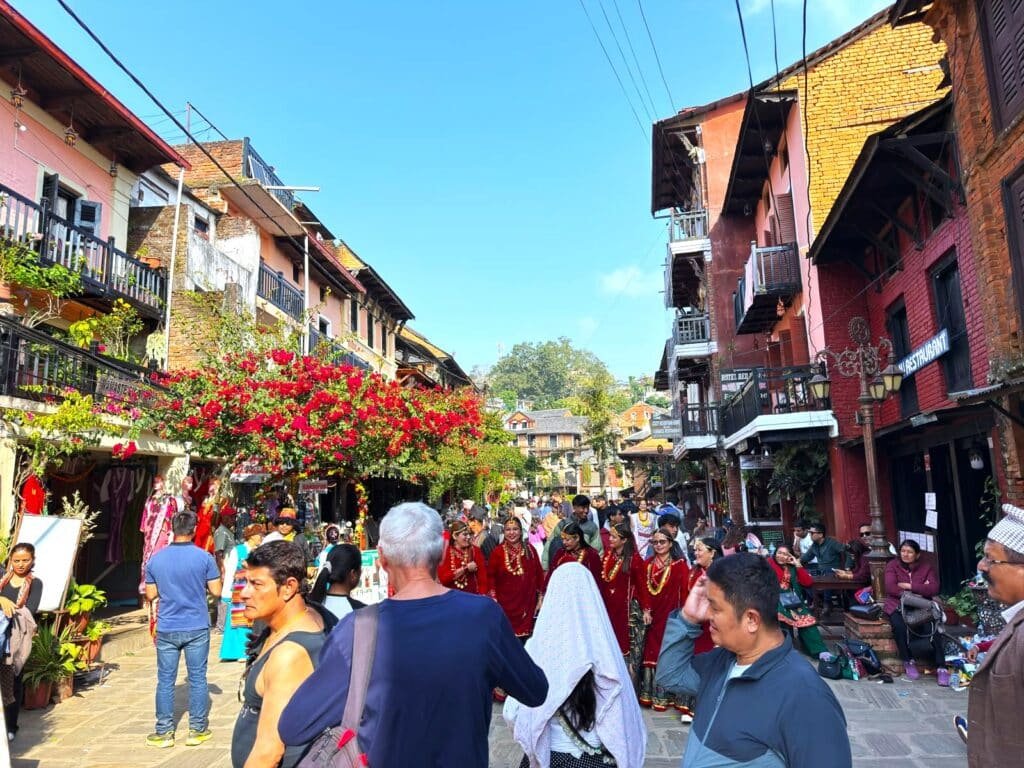
Between Kathmandu Valley and Pokhara sits one of the most underrated highlights of solo travel in Nepal: Bandipur, a beautifully preserved 18th-century Newari trading town perched on a ridge above the Marsyangdi Valley. Most mass-market tour itineraries speed right past it on the highway below.
For independent travelers, Bandipur is frequently the unexpected favorite stop of the entire journey. The main slate-paved bazaar is completely closed to cars and motorbikes, lined with restored brick townhouses, carved wooden balconies, and small family-run cafes.
Because there is no traffic noise or street hassle, it feels effortlessly safe and peaceful to wander at dusk with a camera, chat with local shopkeepers, or sip Himalayan coffee on an open terrace while clouds drift across the valley floor.
4. Pokhara: Sarangkot Dawn, Phewa Lake & Effortless Solo Evenings
A short, scenic two-hour drive from Bandipur brings you down into Pokhara, Nepal’s relaxed lakeside capital and easily one of the most comfortable stops for solo travel in Nepal. Framed by the towering Annapurna massif and the unmistakable fishtail spire of Machhapuchhre, Pokhara shifts the tempo of your trip into pure restoration.
Your sightseeing highlights include:
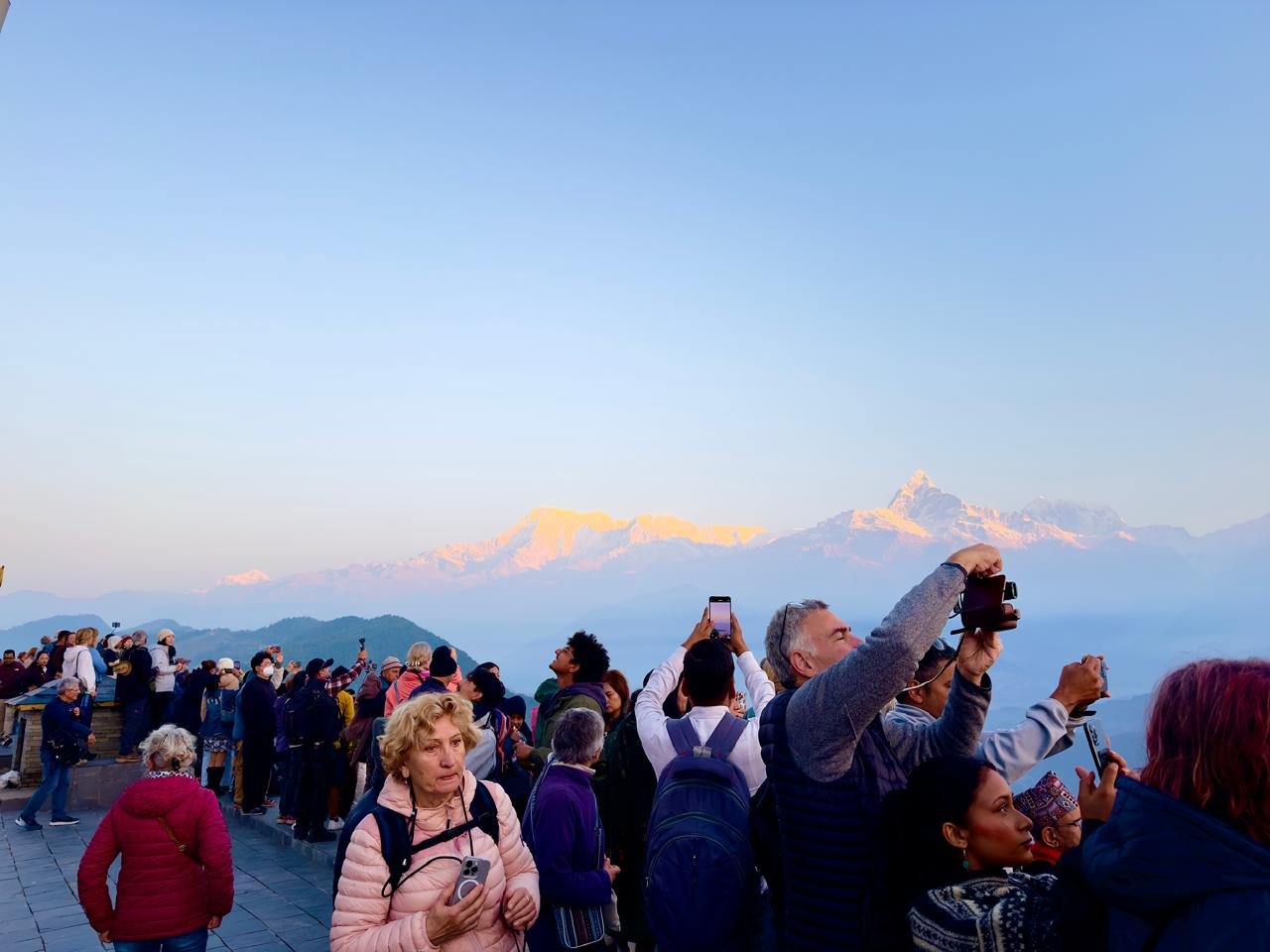
- Sarangkot Sunrise (1,600m): A short private morning drive takes you to paved viewpoints facing Annapurna, Dhaulagiri (8,167m), and Machhapuchhre as morning mist lifts off the emerald waters of Phewa Lake below. You are back at your hotel by mid-morning for a leisurely breakfast.
- Phewa Lake Private Boat Ride: Glide across glassy water toward the island Tal Barahi Temple, with snowcapped peaks reflected directly on the lake’s surface.
- Valley Wonders & Mountain Culture: Explore the roaring subterranean cascade of Devi’s Fall, the sacred limestone chambers of Gupteshwor Cave, and the International Mountain Museum, which chronicles Himalayan geology, Sherpa heritage, and historic climbing expeditions.
- Optional Adventure: If you want an adrenaline spike, Pokhara is one of the world’s premier paragliding hubs—tandem flights off Sarangkot ridge can be added easily for roughly $75 to $100.
Because Pokhara operates on a bed-and-breakfast plan, your evenings belong entirely to you. Pokhara’s Lakeside district is walkable, brightly lit, and full of independent bookshops, garden cafes with live acoustic music, hand-knotted pashmina boutiques, and singing bowl workshops. Dining alone here feels completely natural—nearly every restaurant caters comfortably to single travelers watching the sunset over the water.
5. Chitwan National Park: Subtropical Wilderness on Full Board
For the final chapter of your circuit, you descend from the Himalayan foothills into the lush, subtropical plains of the Terai and UNESCO-listed Chitwan National Park. In just a few hours, pine ridges give way to tall elephant grass, dense sal forests, and slow-moving rivers.
Over two immersive days led by a dedicated local jungle naturalist, you experience Nepal’s wild side from the comfort of a vetted safari lodge:
- Open-Top 4WD Jeep Safari: Venture deep into the park’s core habitats to track the endangered Greater One-horned Rhinoceros, spotted deer, wild boar, marsh mugger crocodiles, vibrant peacocks, and—with rare luck—the elusive Royal Bengal Tiger.
- Rapti River Dugout Canoe Drift: Float silently downstream in a hand-carved wooden canoe past basking gharial crocodiles and kingfishers, followed by a gentle guided walk through buffer-zone trails.
- Tharu Village Walk & Cultural Program: Meet the indigenous Tharu community who have lived alongside Chitwan’s forests for generations, learning about their traditional mud-and-reed architecture and watching an evening stick-dance performance.
What makes solo travel in Nepal even more comfortable in Chitwan is the full-board lodge structure. Breakfast, lunch, and dinner are all served right at your safari resort, meaning you never have to wander unlit rural roads searching for a restaurant after a full day in the jungle.
Choosing Your Comfort Tier & Solo Budget Breakdown
Budgeting for solo travel in Nepal is surprisingly straightforward when your core logistics are bundled. This 10-day private Nepal circuit is available across three comfort tiers without changing the core sightseeing route:
- Standard Tier (from $1,650 per adult): Handpicked 3-star boutique city hotels, scenic hill-station resorts in Nagarkot and Bandipur, a deluxe room at a Chitwan safari lodge, private air-conditioned sedan or Scorpio SUV, plus the Everest Mountain Flight and all seven UNESCO permits.
- Premium Tier (from $2,450 per adult): Upgraded 4-star boutique and heritage properties (such as Kantipur Temple House in Kathmandu and Temple Tree in Pokhara), a premium Chitwan wildlife lodge like Green Park, and a spacious luxury SUV or Toyota HiAce with refreshments.
- Luxury Tier (from $3,250 per adult): Iconic 5-star heritage and nature retreats—including Dwarika’s Hotel in Kathmandu, Club Himalaya in Nagarkot, Fishtail Lodge in Pokhara, and Barahi Jungle Lodge or Kasara in Chitwan—paired with private luxury transport and a 24/7 personal trip concierge.
Practical Extra Costs to Plan For
Beyond your base package rate (note that solo travelers booking a private room pay a standard single-room supplement), on-the-ground expenses remain modest:
- Meals & Incidentals: Since Chitwan is full board and Kathmandu and Pokhara include daily breakfast, budgeting $25 to $50 per day comfortably covers lunches, dinners, specialty coffees, and small souvenirs.
- Nepal Tourist Visa: Most nationalities can obtain a visa on arrival at Tribhuvan International Airport—a 15-day tourist visa costs $30 USD (30 days is $50 USD). You can check current entry rules or complete the online pre-arrival form and payment directly through the official Nepal Department of Immigration portal. अध्यागमन विभाग
- Tipping Etiquette: Tipping is customary and deeply appreciated across Nepal’s tourism sector. A helpful guideline for a 10-day circuit is $8–$12 per day for your main tour guide, $5–$8 per day for your private driver, and $5–$10 per day for your Chitwan jungle naturalist.
Practical Safety & Packing Tips for Solo Travel in Nepal
Time Your Trip Around Your Priorities
- Autumn (September to November): The gold standard for clear mountain visibility. Post-monsoon air washes dust from the skies, giving you crisp views on the Everest Mountain Flight, Nagarkot sunrise, and Sarangkot.
- Winter (December to February): Crisp, dry, and noticeably quieter. Heritage towns like Bhaktapur and Bandipur feel delightfully uncrowded, while Chitwan’s rhinos and crocodiles frequently bask out in the daytime sun.
- Spring (March to May): Warm lakeside days in Pokhara, blooming red rhododendrons across the mid-hills, and active wildlife sightings in Chitwan as tall grasses are cleared.
Pack Smart for Two Different Climates
Smooth solo travel in Nepal comes down to smart layering rather than heavy luggage, since this circuit spans from 2,175-meter Himalayan ridges down to 150-meter subtropical jungle:
- For Nagarkot and Sarangkot dawns: A packable light down jacket or warm fleece, plus a beanie or scarf for chilly sunrise viewpoints.
- For Kathmandu, Bandipur, and Pokhara: Breathable cotton or linen layers, modest clothing covering shoulders and knees for Hindu and Buddhist temples, and supportive walking shoes with good rubber grip for ancient brick courtyards and cobblestones.
- For Chitwan safaris: Lightweight, neutral-colored clothing (khaki, olive, tan, or muted brown) to blend into the forest, polarized sunglasses, insect repellent, and a wide-brimmed hat.
Stay Connected & Carry Small Bills
Pick up a local Ncell or Nepal Telecom SIM card or eSIM right at the arrivals hall of Tribhuvan International Airport. Mobile data is inexpensive and reliable across Kathmandu, Nagarkot, Bandipur, Pokhara, and Sauraha—keeping Google Maps, WhatsApp updates with your guide, and family check-ins effortless. While hotels and upscale restaurants accept credit cards, keep small denominations of Nepali Rupees (NPR) on hand for roadside tea stalls, local crafts, and tips.
Frequently Asked Questions About Solo Travel in Nepal
Is Nepal safe for solo travelers, including solo women?
Yes. Nepal has a deeply hospitable culture rooted in Atithi Devo Bhava (“the guest is equivalent to God”), and established corridors like Kathmandu, Nagarkot, Bandipur, Pokhara, and Chitwan welcome thousands of solo travelers—including solo female travelers—every year. Pairing that warmth with a vetted local operator gives you a licensed guide, private driver, vetted hotels in well-lit neighborhoods, and 24/7 on-the-ground support from arrival to departure.
Can I book this 10-day itinerary for just one person?
Yes. You do not need to wait for a minimum group size or share a bus with strangers. Solo travelers receive a private vehicle and private licensed guide throughout the route, with a single-room supplement applying for private hotel rooms across all nine nights.
Do I need trekking experience or high fitness levels?
No. This itinerary is rated easy and involves zero technical trekking or sustained high-altitude hiking. Your days consist of scenic drives, gentle heritage walks, boat rides, sunrise viewpoints, and 4WD jeep safaris—making it completely accessible for beginners and casual walkers.
Will I have enough free time to explore on my own?
Yes. While daytime logistics, permits, and guided excursions are smoothly organized so you never waste time troubleshooting transport, your evenings in Kathmandu, Bandipur, and Pokhara are unscheduled. You can wander Lakeside, journal at a rooftop cafe, book a Himalayan spa treatment, or simply unwind at your hotel whenever you like.
Ready to Experience Nepal on Your Own Terms?
You do not have to turn your vacation into a full-time logistics project just to experience the Himalayas independently. By linking Kathmandu’s living temples, an eye-level Everest flight, Nagarkot’s ridge-top sunrise, car-free Bandipur, lakeside Pokhara, and Chitwan’s wild rhinos into one seamless loop, you can take the stress out of solo travel in Nepal and focus completely on the journey.
Explore the full day-by-day route, accommodation tiers, and inclusions on our guided Everest, Pokhara, and Chitwan itinerary, or reach out to the Himalayan Walkers team to customize dates for your solo adventure.

