

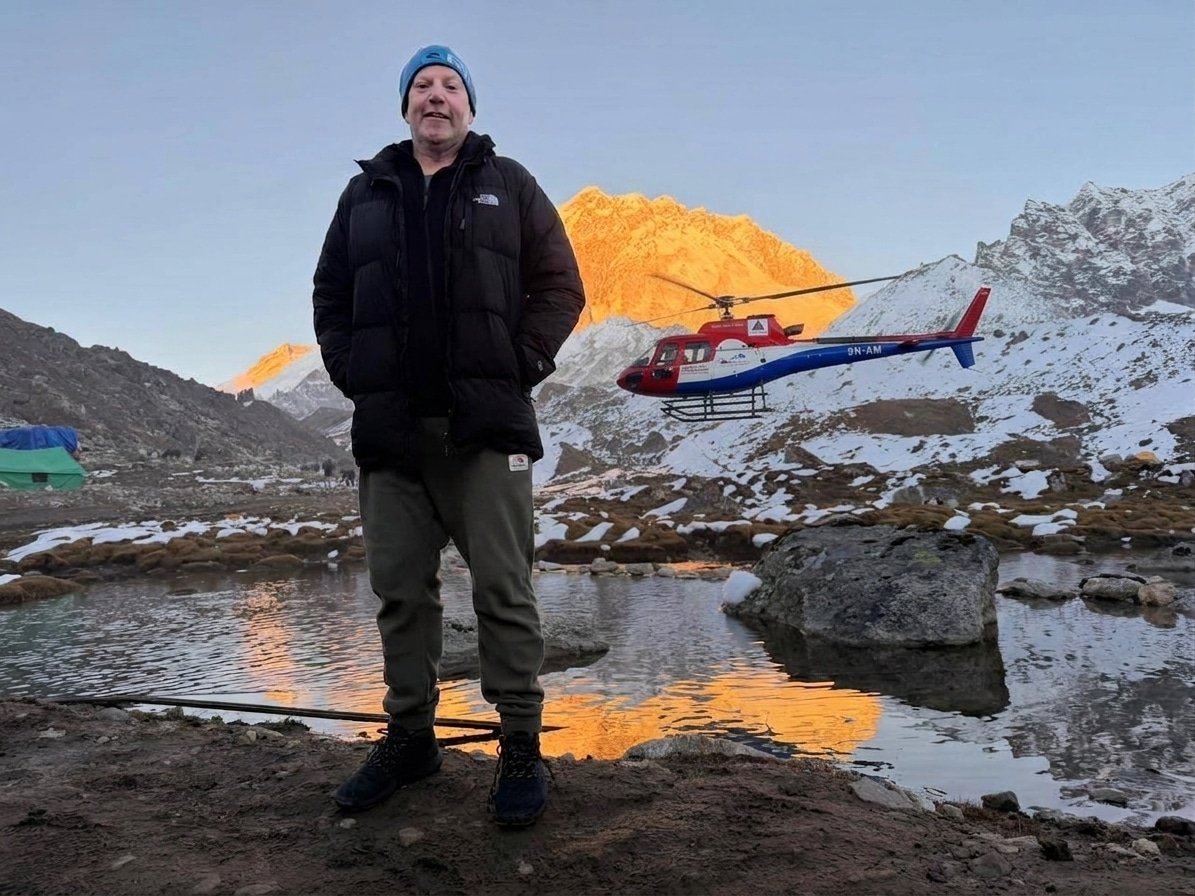
If you’re weighing up an Everest trip and can’t quite decide whether to spend several extra days walking back down from Base Camp, you’ve probably typed some version of this into Google already: is EBC trek with helicopter return worth it?
Honestly, it depends on what you actually want out of the trip.
An Everest Base Camp Trek with Helicopter Return isn’t a shortcut around the trekking itself. You still walk the Khumbu Valley, still take your acclimatization days at altitude, still pass through the Sherpa villages and monasteries, still pass through highest altitude National Park in the World ‘Sagarmatha National Park‘ and still arrive at Base Camp on your own two feet.
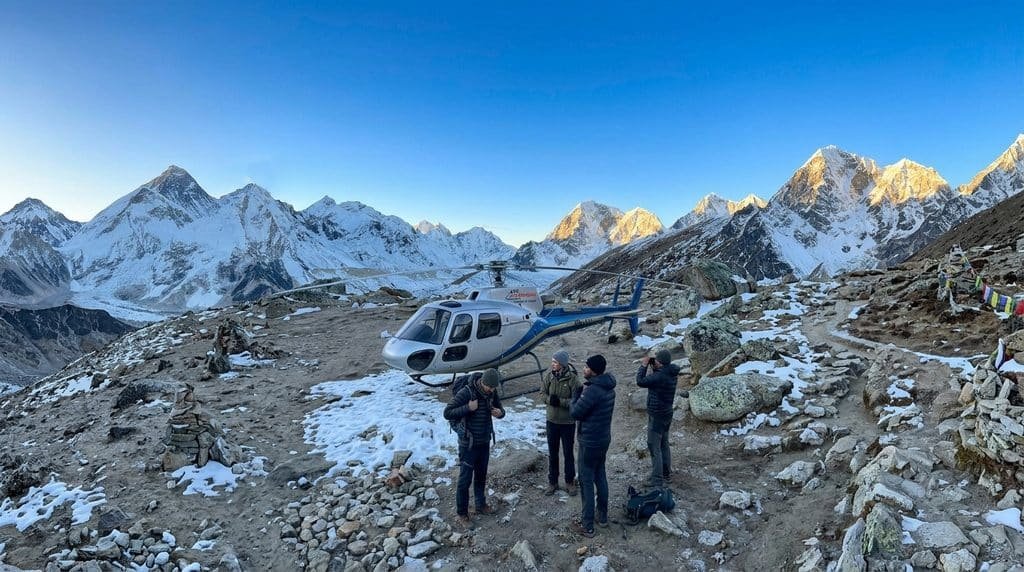
The only thing that changes is how you get back — instead of retracing the trail toward Lukla over several more days, a helicopter picks you up from the Everest region.
For travelers who don’t have unlimited vacation days but still want to earn that trek to Base Camp, it’s a genuinely attractive middle ground. Here’s what to weigh before booking our 10-day helicopter-return itinerary.
What Exactly Is an EBC Trek with Helicopter Return?
It’s a multi-day Everest Base Camp trek, paired with a helicopter flight at the very end instead of the walk back.
You follow the same classic route through the Khumbu — Namche Bazaar, Tengboche, Dingboche, and the high settlements leading up to Gorak Shep. Once you’ve reached Everest Base Camp, that’s where the helicopter takes over. The ascent doesn’t change at all.
Put simply:
Trek to Everest Base Camp → reach the Everest region → fly back by helicopter to Kathmandu.
That’s a different trip entirely from an Everest Base Camp helicopter tour, where you fly into the region and never trek at all. Himalayan Walkers runs the helicopter-return version as a 10-day, 9-night journey — the helicopter replaces the descent, not the climb.
So, Is EBC Trek with Helicopter Return Worth It?
That comes down to your time, budget, and what kind of trekking experience you’re after. A few reasons travelers choose this route:
You still trek to Everest Base Camp
This is the part people worry about most, and the answer is reassuring: the helicopter doesn’t take anything away from the trek itself. You’re still walking through changing Khumbu landscapes, crossing suspension bridges, passing monasteries, spending real time in Sherpa communities, and gaining altitude gradually before reaching Base Camp.
That’s what separates this from a helicopter tour- if your goal is to say you trekked to Everest Base Camp, this itinerary keeps that fully intact.
You save real time
A standard EBC trek has you walking back down after reaching Base Camp, and depending on the itinerary, that descent can eat up several extra days. Swap it for a helicopter and that time is simply gone from your schedule — which matters a lot if you’re working with limited annual leave, or trying to fit Everest into a longer Nepal trip.
Himalayan Walkers’ version runs 10 days total, shorter than our standard EBC trek — and the time saved comes specifically from cutting the return walk, not from rushing the climb.
The way back becomes its own experience
There’s also just… the view. After days spent walking through the Khumbu at ground level, seeing that same terrain from a helicopter is something else entirely — glaciers, ridgelines, villages, and valleys you crossed on foot, now spread out below you.
For a lot of trekkers, that flight ends up being one of the most memorable parts of the whole trip, not just a way to get back to Kathmandu.
It fits a tighter schedule
If a full round-trip EBC trek doesn’t fit your available time off, this is a way to keep the parts that matter — the ascent, the culture, reaching Base Camp — while trimming the return.
That’s especially useful if Everest is one stop on a bigger Nepal itinerary that also includes Kathmandu, Pokhara, or Chitwan.
Does the Helicopter Make the Trek Easier?
This is the part worth being upfront about: it shortens the journey, but it doesn’t make Everest Base Camp an easy trek.
You still need to walk to high altitude. The helicopter changes none of the following:
- Long trekking days
- Steep trail sections
- High-altitude conditions
- Acclimatization requirements
- Cold
- Uneven terrain
- The physical effort of actually reaching Base Camp
Everest Base Camp sits at roughly 5,364 meters, and side trips like Kala Patthar take you even higher. Our itinerary keeps full acclimatization built into the ascent — we don’t rush anyone toward Base Camp just because the return is shorter.
So if what’s bothering you is the thought of a long walk back down, the helicopter solves that. If what’s bothering you is high-altitude trekking in general, this isn’t the workaround for that.
How Much Actual Trekking Is Involved?
A lot — this isn’t a helicopter tour with a token walk attached.
You trek from the Lukla region through the Khumbu Valley all the way to Base Camp, typically passing through:
- Lukla
- Phakding
- Namche Bazaar
- Tengboche
- Dingboche
- Lobuche
- Gorak Shep
- Everest Base Camp
Exact stops depend on the itinerary. Worth flagging: the term EBC Heli Trek sometimes gets misread as “the helicopter does most of the work.” It doesn’t — it only replaces the trip back, after you’ve already done the trekking that matters.
Helicopter Return vs. the Classic EBC Trek
Laid out side by side, it’s easier to see what actually changes:
| Feature | Classic EBC Trek | EBC Trek with Helicopter Return |
| Everest Region | Everest Region | Everest Region |
| Trek to Everest Base Camp | Yes | Yes |
| Acclimatization | Yes | Yes |
| Khumbu villages & monasteries | Yes | Yes |
| High-altitude trekking | Yes | Yes |
| Reach Base Camp on foot | Yes | Yes |
| Return trek | Yes | No |
| Helicopter return | No | Yes |
| Overall duration | Longer | Shorter |
| Budget | Generally Lower | Generally Higher |
| Main advantage | Complete Journey on Foot | Shorter Return |
It’s not really real trek versus helicopter trip. It’s completing the return on foot versus flying out once you’ve already reached the goal.
Who Tends to Choose This Option?
Usually travelers who:
- Are short on time. Can’t commit to the full round-trip itinerary but still want the trek itself.
- Want the trekking, not the flyover. You’re here to walk through the Khumbu, not skip it.
- Aren’t excited about the descent. Some trekkers care far more about reaching Base Camp than about retracing the same trail for several more days afterward.
- Want a dramatic finish. The helicopter isn’t just transport — it’s a different way of seeing everything you just walked through.
- Are combining Everest with a bigger Nepal trip. If Base Camp is one piece of a longer holiday, saved days mean more time in Pokhara, Chitwan, or on a cultural tour elsewhere in Nepal.
Who Might Prefer the Classic Trek Instead?
The helicopter-return version isn’t automatically the better choice for everyone. The traditional route might suit you more if:
- You’ve got the time for the full round trip
- You want to walk the return trail too, not just fly over it
- You genuinely enjoy longer treks
- Budget is a bigger factor than time
- Finishing the entire route on foot matters to you
The walk back isn’t wasted time — it’s still the Himalayas, just from a different angle and pace than the ascent. Which option is worth it really comes down to what you personally value most from the trip.
How Is This Different From an Everest Base Camp Helicopter Tour?
An Everest Base Camp Helicopter Tour is a flight-based experience — no multi-day trek involved.
An Everest Base Camp Trek with Helicopter Return is a real multi-day trek — you walk to Base Camp, and only the return leg is by air.
The helicopter tour suits travelers who want to see the Everest region without trekking at all. The helicopter-return trek is built for people who specifically want the trekking experience, just with a shorter way home.
In short:
Helicopter Tour: Fly → see Everest → fly back
EBC Trek with Helicopter Return: Trek → reach Base Camp → fly back
Classic EBC Trek: Trek → reach Base Camp → trek back
Knowing the difference before you book saves a lot of confusion later.
Does It Actually Save Energy?
Yes — but only at the tail end of the trip.
By the time you board the helicopter, you’ve already done the demanding part: the high-altitude climb to Base Camp. What you’re skipping is the multi-day walk back down afterward, not the trek itself.
If your priority is finishing the trip without spending several more days descending, that’s exactly what this solves. It’s not a way to dodge the physical demands of the climb — those are still very much part of the deal.
What About Acclimatization?
It still matters just as much. A shorter overall itinerary is not a reason to climb faster.
Moving up from the lower Khumbu through Namche, Tengboche, Dingboche, and the higher settlements, your body still needs time to adjust to thinning air.
The helicopter-return model only works well when the time saved comes from cutting the descent — not from compressing acclimatization days. When you’re comparing packages, look past the day count and check how each one actually handles altitude gain.
Best Time of Year for This Trek
Spring and autumn are the reliable windows.
- Spring (March–May): Milder conditions lower down, rhododendrons in bloom, generally good trekking weather — also a busy season on Everest itself.
- Autumn (September–November): Clear post-monsoon skies and strong mountain visibility, one of the most popular windows for trekking.
For a helicopter-return trip specifically, weather matters more than usual — the flight depends on decent visibility and flying conditions, and cloud, wind, or poor visibility can all cause delays.
It’s worth building some slack into your schedule and avoiding a tight international connection right after your expected helicopter arrival. We recommend spring or autumn for this itinerary specifically.
What If the Helicopter Can’t Fly?
Ask this before booking any Everest Base Camp helicopter-return trip — it matters.
Mountain weather shifts fast, and flights only go ahead when conditions are safe. Delays can happen because of:
- Poor visibility
- Cloud cover
- Strong wind
- Sudden weather changes
- Operational restrictions
Build flexibility into your Nepal schedule, and when comparing operators, ask directly what their contingency plan is if the helicopter can’t fly on schedule. Don’t book based on a promised flight time alone — mountain weather doesn’t always cooperate.
Is It More Expensive?
Generally, yes — a helicopter adds real cost compared to simply walking back to Lukla.
But weigh that against what you’re getting: several saved days, a genuinely unique aerial experience, less time spent on the return trail, and more flexibility if your vacation time is limited.
When comparing the cost of different helicopter-return packages, check what’s actually included:
- Kathmandu accommodation
- Kathmandu–Lukla flights
- Helicopter return
- Trekking guide
- Porter
- Trekking accommodation
- Meals
- Permits
- Airport transfers
- Staff insurance
- Pre-departure briefing
Our current package lists full inclusions and exclusions on the trip page itself.
Is It Suitable for Beginners?
Prior high-altitude experience helps, but it’s not a strict requirement. What matters more is preparation, fitness, and a willingness to pace yourself the way your guide recommends.
One thing to be clear on: the helicopter return doesn’t make the climb to Base Camp easy.
Before you go, it’s worth building some endurance through:
- Regular hiking
- Stair climbing
- Cardio training
- Strength work
- Longer weekend walks
- Practicing with a loaded daypack
And talk to a doctor about any relevant health concerns before taking on a high-altitude trek.
What to Check Before Booking a Helicopter-Return Package?
A few things worth comparing beyond just does it have a helicopter:
The itinerary- does it leave room for proper acclimatization?
The helicopter arrangement -shared or private, and what’s actually included in the price?
Weather contingency— what’s the plan if the flight is delayed?
Trekking support- experienced guide included? How are porters handled?
Inclusions – does the quoted price cover accommodation, meals, permits, Lukla flights, and the helicopter itself?
Group size – a smaller group changes the feel of the trek quite a bit compared to a large one.
These details are often where seemingly similar packages actually differ the most.
Is the Extra Cost Worth It?
For most travelers, the case for the helicopter return is really about time, not comfort.
Someone with limited annual leave who still wants to see Everest Base Camp — and other parts of Nepal too — will likely find real value in cutting several days off the return.
Someone with three weeks to spare who enjoys every stretch of the walk might feel differently; for them, finishing the whole route on foot could matter more than the time saved.
So it’s less “is the helicopter better” and more.
What do you actually want from this trip?
Want the complete trekking experience, there and back? Go classic. Want to trek to Base Camp but shorten the return? This is likely the better fit. Want to see Everest without trekking at all? That’s a different trip — a helicopter tour.
Final Thoughts: Is EBC Trek with Helicopter Return Worth It?
The EBC Trek with Helicopter Return sits in the middle — more trekking than a helicopter tour, less time commitment than the full round-trip classic route.
You still earn the walk to Base Camp. You still get the Khumbu Valley, the Sherpa villages, the monasteries, the suspension bridges, the altitude. What changes is simply how you get home — a helicopter flight over everything you just walked through, instead of several more days retracing your steps.
The right reason to choose it isn’t that it makes Everest easier. It’s that it gives you a shorter way to finish the journey once you’ve already reached the goal.
Planning an Everest Base Camp Trek with Helicopter Return?
Take a look at the current itinerary, cost, and booking details for our helicopter-return package to see if it fits your Nepal plans.

