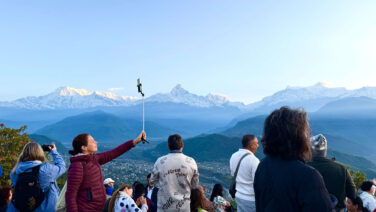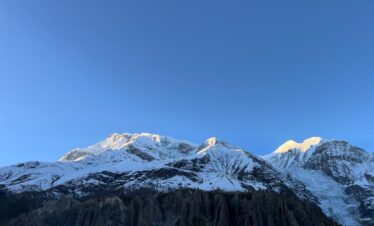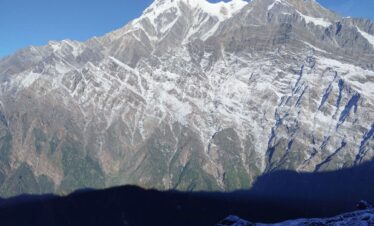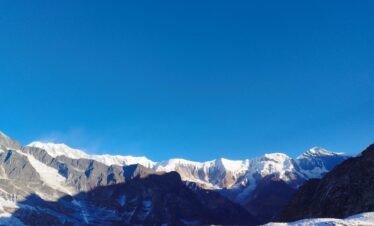
Discover the remote beauty of Nepal’s Kanchenjunga Trek, with stunning landscapes, unique culture, and views of the world’s third-highest peak
Trip Info
-
3/4/5 Star or Similar Category Hotel
-
Autumn, Spring
-
Available
-
5143 Meters
-
BB Plan in KTM, BLD during Trek
-
Bus, Car
-
5-6 Hours
-
18
-
70
-
2 - 20

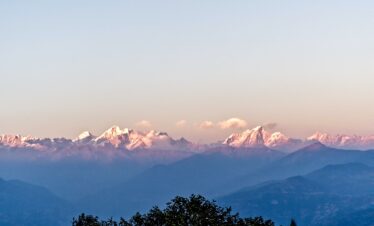
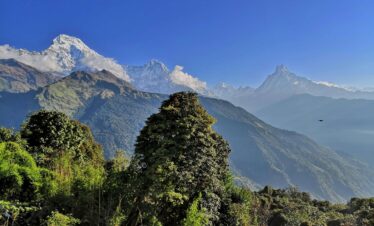
The Kanchenjunga Trek Nepal takes you into one of the most remote and untouched corners of the Himalayas — a region defined by Mt. Kanchenjunga (8,586m), the third-highest peak on Earth.
Tucked into the far eastern reaches of Nepal, where the country borders both India and Tibet, this trek is a journey into landscapes that remain largely unexplored by international trekkers, offering pristine wilderness, dramatic mountain scenery, and a level of solitude that’s increasingly rare in Nepal’s more popular trekking regions.
Unlike Everest Base Camp or the Annapurna Circuit, the Kanchenjunga Base Camp region sees only a fraction of the foot traffic. That relative obscurity is precisely what makes this trek special — every valley, pass, and viewpoint feels genuinely earned, with far fewer crowds and a much deeper sense of connection to the raw, unfiltered Himalayas.
A 24-Day Journey Through Untouched Wilderness
The Kanchenjunga Trek Nepal spans 24 days from arrival to departure, making it one of the longer and more immersive treks in the Himalayan region.
This extended timeline isn’t just about distance — it allows for a carefully paced ascent with dedicated acclimatization days, minimizing the risk of altitude sickness as trekkers push toward elevations above 5,000 meters.
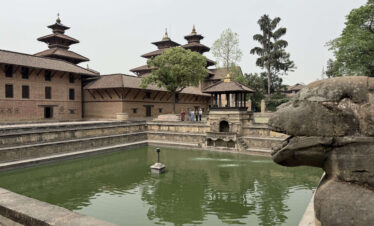
The journey begins in Kathmandu with two days of preparation, including a guided tour of the valley’s UNESCO World Heritage Sites, before a scenic 45-minute flight to Bhadrapur in Nepal’s southeastern plains.
From there, the route winds through Ilam — often called Nepal’s “Tea Capital” for its rolling tea gardens and cool mountain air — before continuing to Taplejung, the true starting point of the trek itself.
From Taplejung, the trail follows the Tamor River through a string of villages — Mitlung, Chirwa, Sekathum, Amjilossa, Gyabla — each offering a different flavor of eastern Nepal’s rural life.
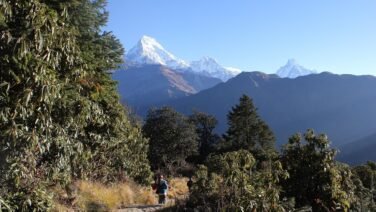
Along this stretch, trekkers pass through cardamom fields, dense forests of bamboo and rhododendron, and suspension bridges spanning rushing rivers, gradually gaining altitude as the landscape shifts from subtropical lowlands to alpine terrain.
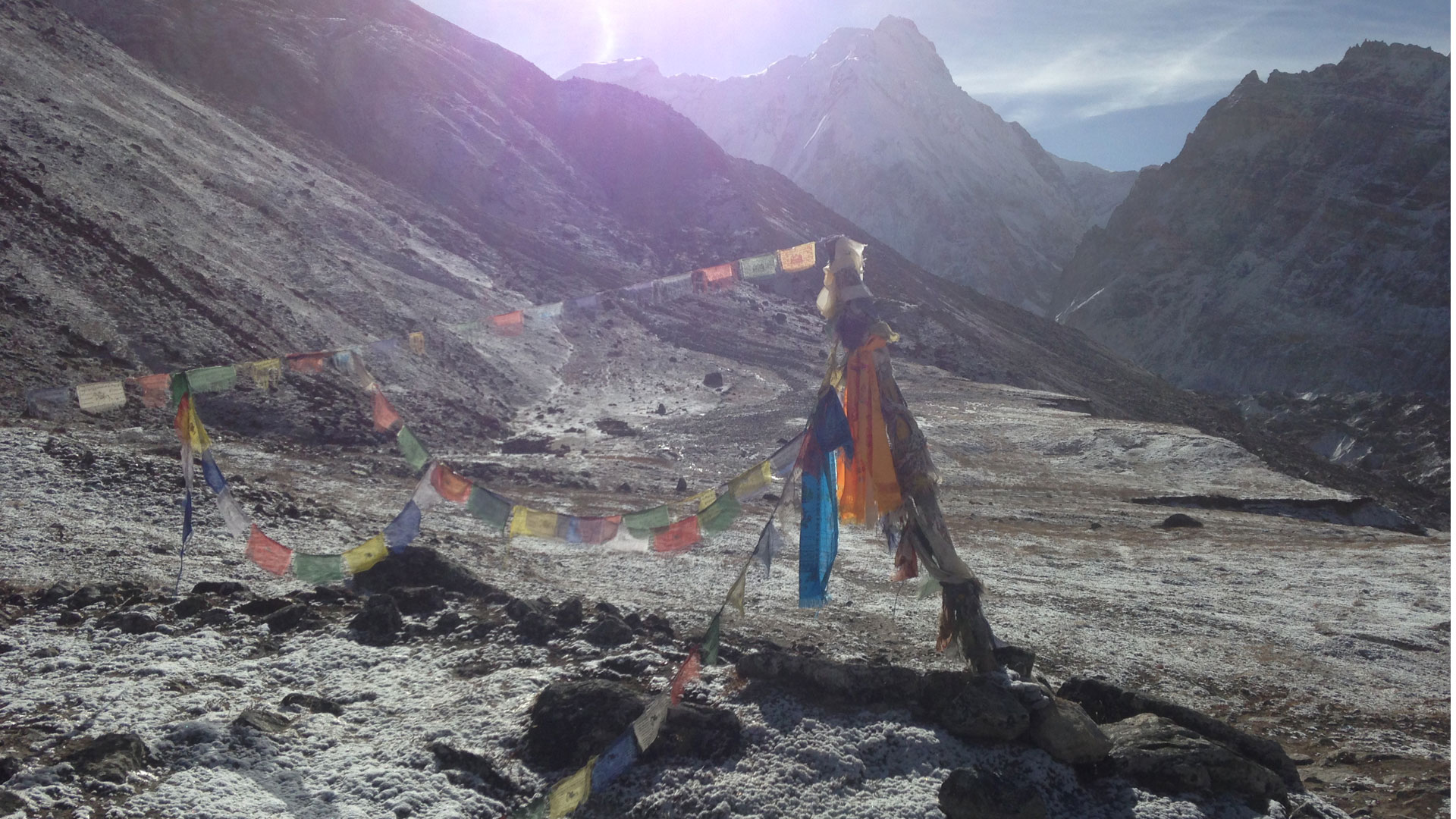
By the time the trail reaches Ghunsa, a Tibetan-influenced village at 3,595m, the character of the trek changes noticeably. Stone houses, fluttering prayer flags, and a quiet monastery mark the beginning of the high Himalayan section, and from here the Kanchenjunga trek pushes toward its most dramatic terrain.
Twin Base Camps: A Rare Himalayan Achievement
What sets this trek apart from nearly every other trekking route in Nepal is its dual base camp structure. Most Himalayan treks lead to a single base camp — this one leads to two.
The trail first climbs through Khambachhen and Lhonak toward Pangpema, the North Base Camp of Kanchenjunga, sitting at a formidable 5,143 meters.
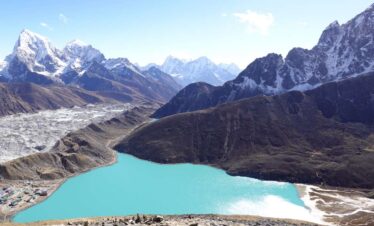
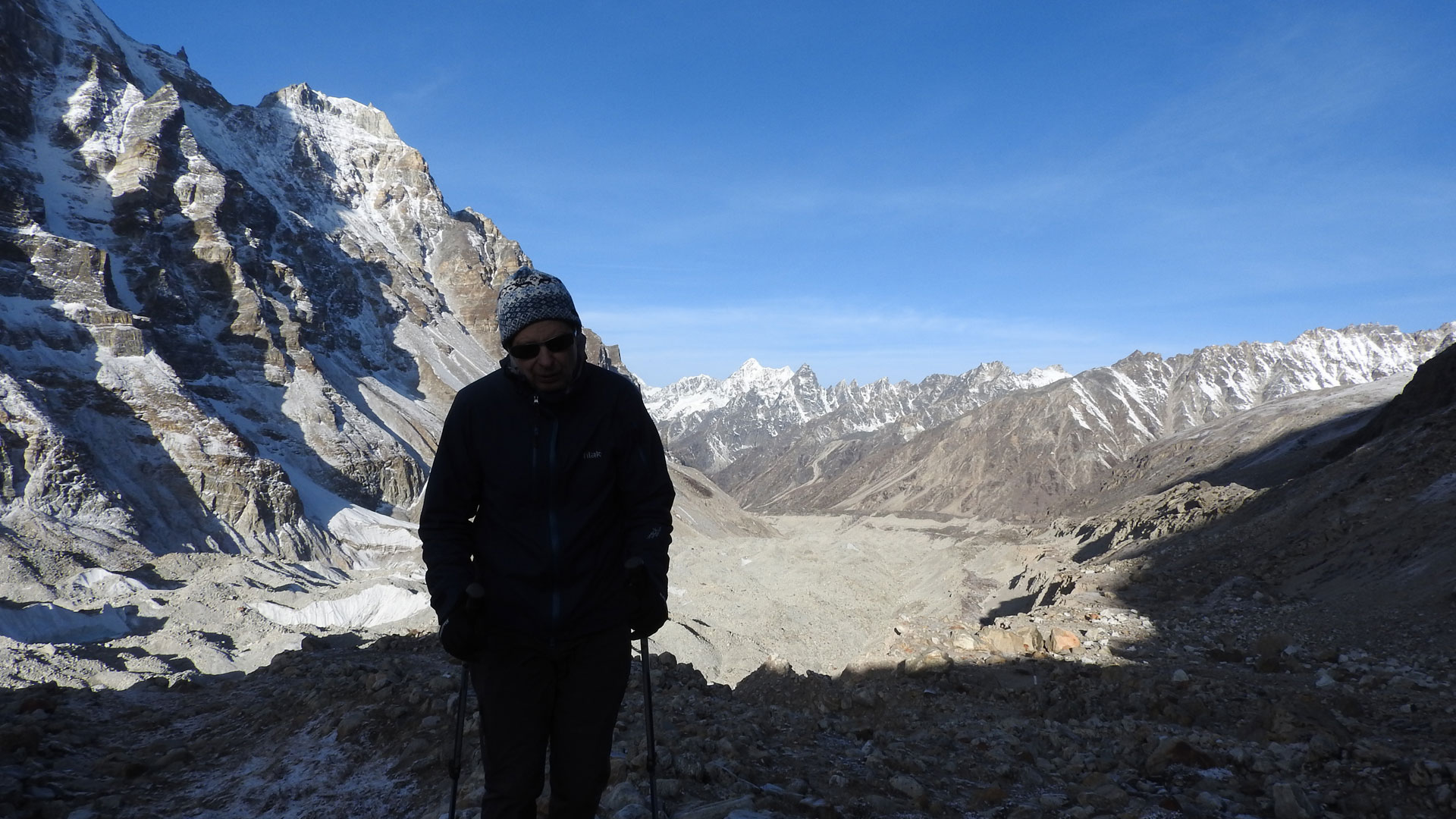
Reaching Pangpema means standing directly beneath Kanchenjunga’s north face, surrounded by glaciers, moraines, and jagged ridgelines in one of the most remote and awe-inspiring settings the Himalayas have to offer.
After returning to Lhonak and then Ghunsa, the route shifts direction entirely, crossing two demanding high-altitude passes — Sele La (4,290m) and Mirgin La (4,670m) — to reach the southern side of the range.
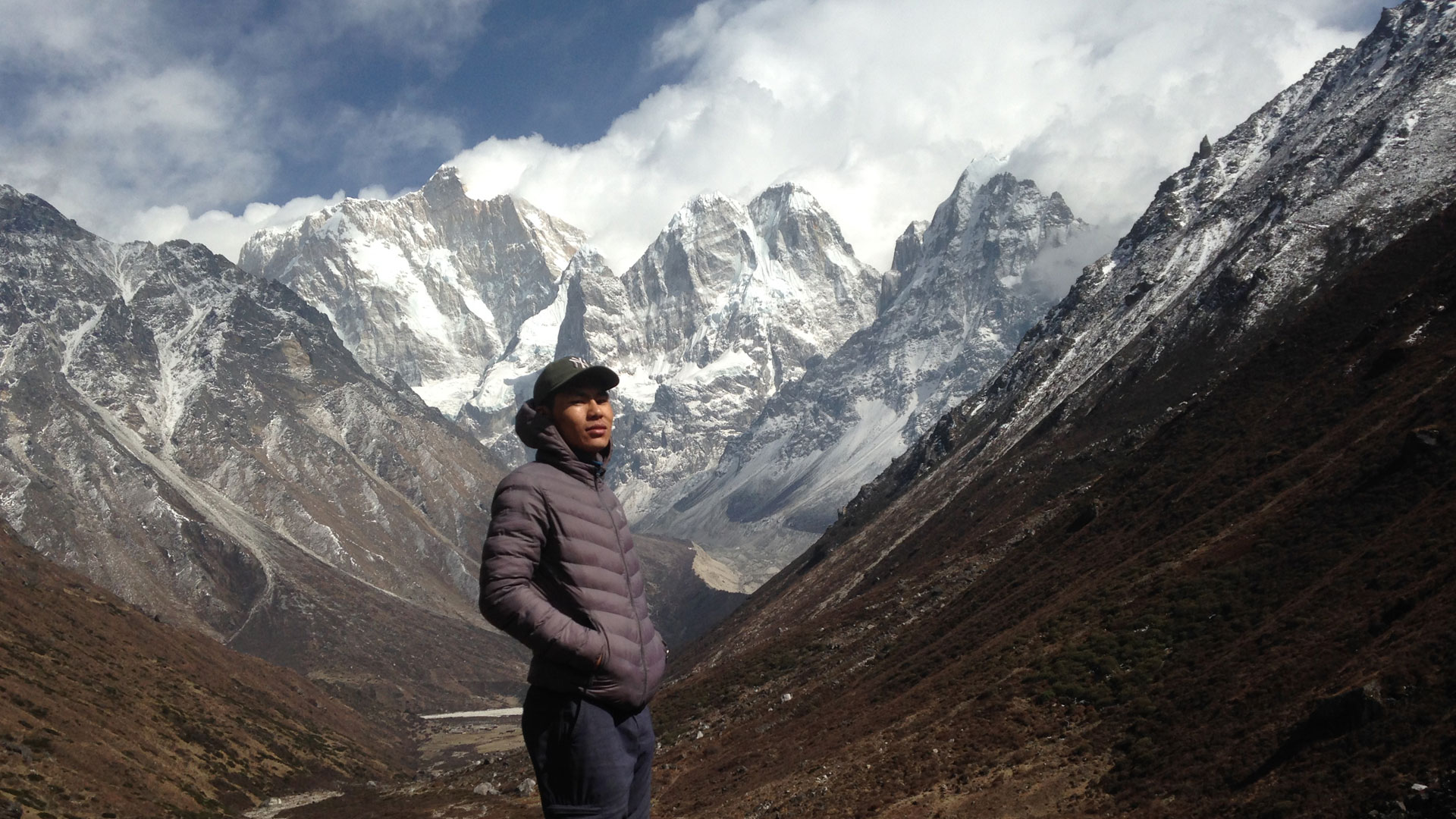
This crossing is widely considered the physical and scenic highlight of the entire trek, with sweeping panoramic views that stretch across the full Kanchenjunga massif, including Jannu and the surrounding glacial systems.
From High Camp, the trail descends toward Tseram, Ramche, and finally Oktang, the gateway to Kanchenjunga’s South Base Camp. Here, trekkers are treated to unobstructed views of the mountain’s south face and the dramatic glaciers that feed the Yalung system — a sight matched by very few other viewpoints in the entire Himalayan range.
Completing both base camps in a single trek is a genuinely rare achievement, and it’s a major part of what makes the Kanchenjunga Trek Nepal worth the extended time commitment.
A Landscape of Extraordinary Diversity
Few treks in Nepal offer as much environmental variety as this one. The Kanchenjunga trek moves through no fewer than five distinct ecological zones over its course — from subtropical river valleys and dense forests near Taplejung, through temperate rhododendron and oak woodlands, into alpine meadows dotted with yak pastures, and finally into the stark, glacier-carved high-altitude zones surrounding both base camps.
This diversity extends to wildlife and vegetation as well. Trekkers pass through some of the last remaining habitats for species like the red panda and Himalayan black bear, alongside a rich variety of birdlife found throughout the Kanchenjunga Conservation Area.
Cardamom fields, a key regional crop, line parts of the lower trail, while higher up, wildflowers and alpine grasses give way to bare rock, ice, and snow.
The Kanchenjunga range itself feeds five major glacier systems, two of which — including the significant Yalung Glacier on the mountain’s southern flank — flow into Nepal and form the headwaters of the Tamor River, the same river the trail follows for much of its lower stretch.
Cultural Immersion in Eastern Nepal
Beyond its natural drama, the Kanchenjunga Trek Nepal is also a deep dive into the culture of eastern Nepal — a part of the country far less visited than the Everest or Annapurna regions.
The trail passes through villages inhabited largely by the Rai and Limbu ethnic communities, whose traditions, religious practices, and daily rhythms differ noticeably from the more commonly encountered Sherpa culture of central and eastern trekking routes.
Trekkers are welcomed into teahouses and villages where hospitality remains genuinely unhurried, offering real opportunities to learn about local customs, traditional farming practices, and the rhythms of life in one of Nepal’s most remote inhabited regions.
Higher up, as the trail approaches Ghunsa, the cultural character shifts again — this time toward Tibetan Buddhist influence, visible in the prayer flags, chortens, and small monasteries that mark the higher villages.
Best Time to Trek
The Kanchenjunga trek is best undertaken during two windows: spring (March to May) and autumn (September to November).
Spring brings blooming rhododendron forests and generally stable weather, with moderate temperatures that make the lower and mid-altitude sections particularly enjoyable.
Autumn, meanwhile, offers the clearest skies of the year and the best overall visibility for mountain views, with a lower chance of rain disrupting the trek. Both seasons are considered prime time, and the choice often comes down to whether you’d rather see the region in bloom or under its clearest autumn skies.
Winter and the monsoon season are best avoided — heavy snow closes the high passes in winter, while monsoon rains make the lower trail sections slippery and reduce visibility throughout.
Difficulty and Preparation
This is not a beginner’s trek. The Kanchenjunga Trek Nepal is rated as challenging, and it’s best suited to trekkers who already have some high-altitude trekking experience and a strong baseline level of fitness.
Between the two demanding passes, the sustained high-altitude sections above 4,000 meters, and the sheer physical duration of 24 days on the trail, this route asks a lot of trekkers — but it rewards that effort with scenery and solitude that few other Himalayan treks can match.
The itinerary is deliberately structured to protect against altitude sickness, with built-in acclimatization days at key points, including a full rest day in Khambachhen before the push toward Pangpema.
Trekkers should still arrive prepared, with realistic expectations about the physical demands of consecutive long trekking days across variable terrain.
Permits and Logistics
Two permits are required for this trek: the Kanchenjunga Conservation Area Permit (KCAP) and the TIMS (Trekkers’ Information Management System) Card.
Both are straightforward to arrange in Kathmandu, and Himalayan Walkers handles all necessary paperwork ahead of the trek, so there’s nothing for trekkers to manage independently before departure.
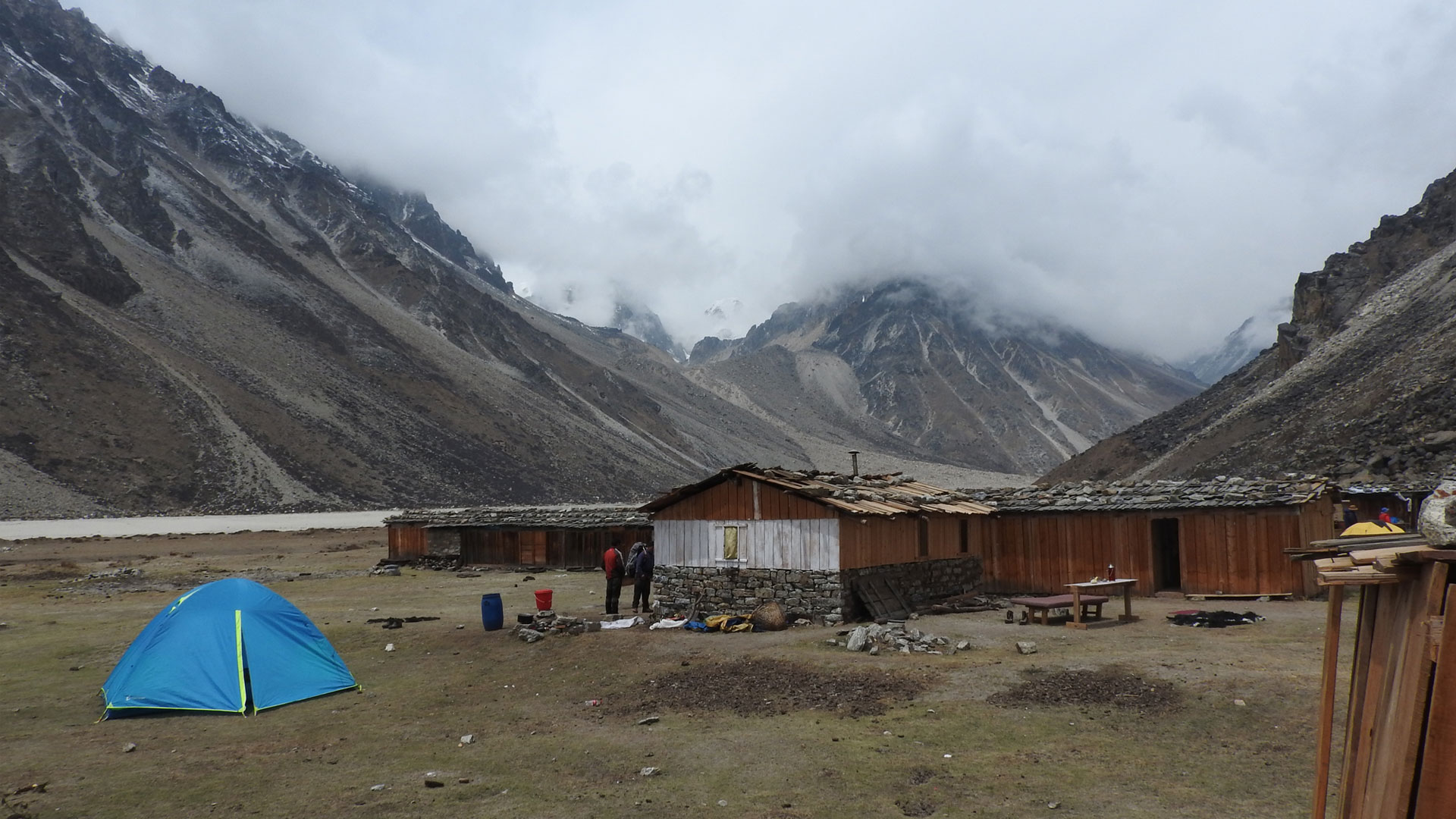
Accommodation throughout the trek consists of teahouses and basic lodges — comfortable, if simple, with the warmth of local hospitality making up for the more modest facilities found in this remote part of the country.
Given the region’s isolation compared to more commercialized routes, don’t expect the same density of amenities found on trails like Everest Base Camp; that relative scarcity is, again, part of what makes the region feel genuinely wild.
Why Choose the Kanchenjunga Trek
For trekkers who’ve already experienced Nepal’s more popular routes — or who are simply looking for something more remote from the outset — the Kanchenjunga Trek Nepal offers an experience that’s increasingly hard to find elsewhere in the country.
It combines the scale and drama of a true high-altitude Himalayan expedition with a level of solitude, cultural depth, and ecological diversity that few other treks can match.
Standing beneath Kanchenjunga at either of its two base camps, surrounded by glaciers and some of the highest peaks on the planet, with barely another trekking group in sight, is an experience that stays with people long after the trip ends.
For those seeking adventure without crowds, and a genuine journey into one of the last truly wild corners of the Nepal Himalayas, this trek delivers something increasingly rare — a real sense of discovery.
Kanchenjunga Trek Overview: Nepal's Most Remote Himalayan Frontier
Far from Nepal’s more crowded trails, the Kanchenjunga Trek Nepal leads to the base of the world’s third-highest mountain through one of the last truly remote corners of the Himalayas.
Over 24 days, the route climbs from subtropical river valleys to twin base camps — a rare feat most Nepal treks don’t offer — crossing high passes, glacial terrain, and villages of the Rai and Limbu people along the way. It’s a trek built for those who’ve outgrown the busier routes and are ready for something wilder.
Key Highlights of this Trip
- Scenic flight to Bhadrapur which offers a stunning views of Himalayas including Mt. Everest
- Walking through Yalung glacier
- Visit UNESCO World Heritage Site and exploring its different aspects
- Exploring less traversed mountain region in Nepal
- Diverse geographical landscapes, flora and fauna
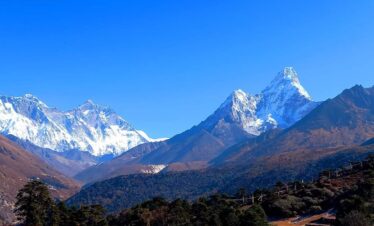
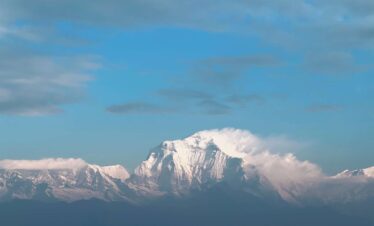
- Jaw dropping views of Mt. Kanchenjunga and its subsidiary peaks around