
For adventure enthusiasts living in Singapore, standing beneath the towering ice seracs of the Khumbu Icefall inside Sagarmatha National Park (a UNESCO World Heritage Site) is the ultimate high-altitude pilgrimage.
Yet, living in one of the world’s most fast-paced corporate hubs presents a familiar dilemma: how to undertake a bucket-list Himalayan expedition on a standard Singapore annual leave allowance.
A conventional Everest Base Camp trek demands between 14 and 16 days on the ground. When you factor in transit days and recovery, most professionals in Singapore simply cannot burn three full weeks of leave on a single vacation.
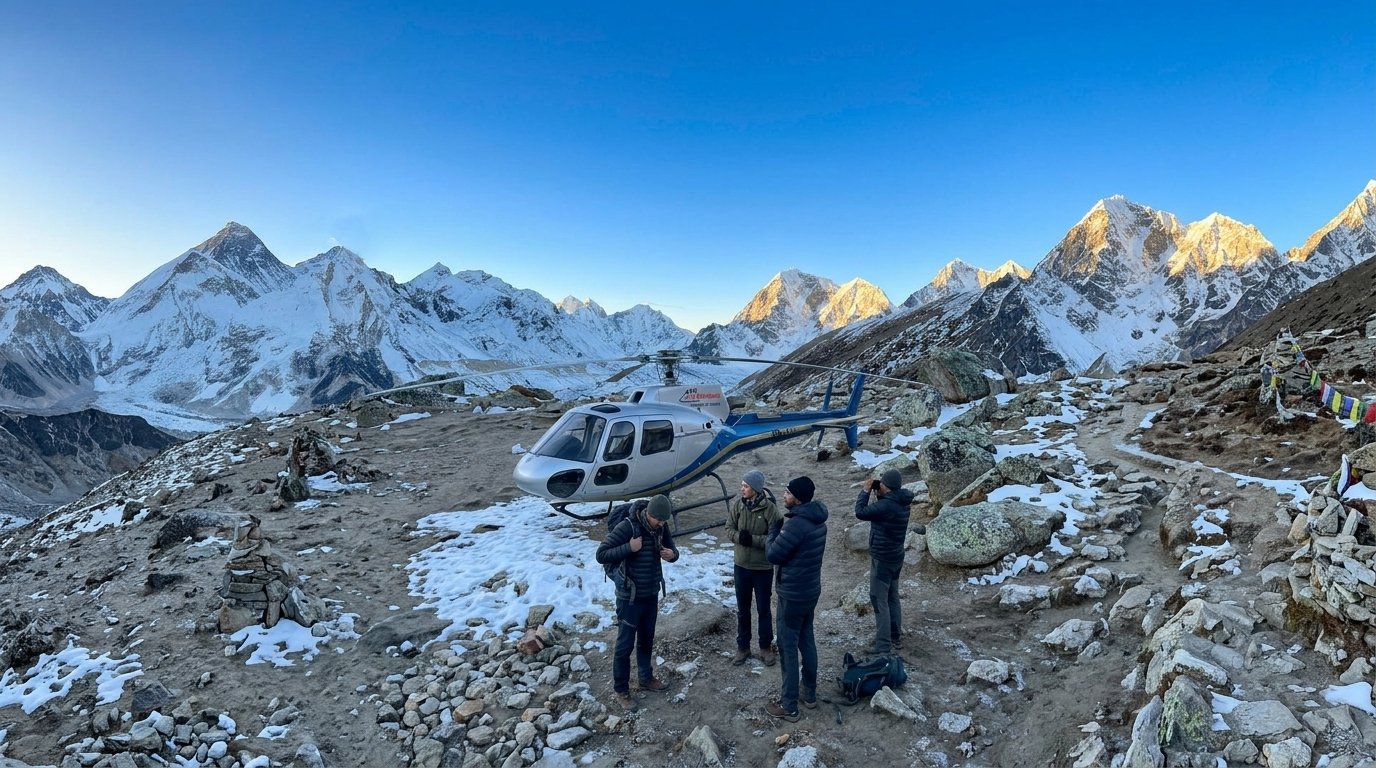
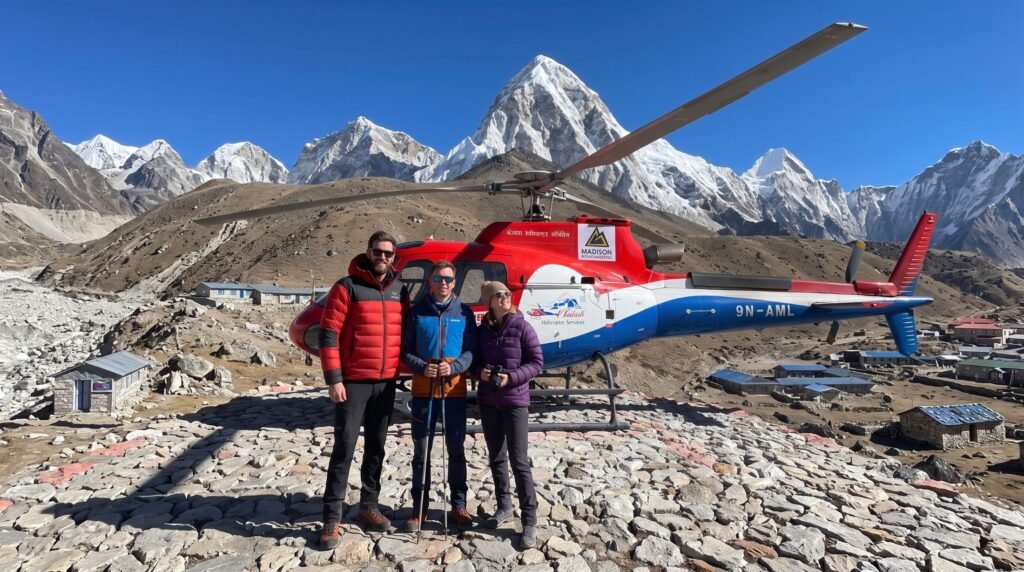
Fortunately, modern high-altitude logistics have created a smarter alternative. By hiking up to Base Camp to earn the physical achievement and taking a scenic chartered helicopter back to Kathmandu, an Everest Base Camp trek from Singapore can be completed comfortably within 10 days.
By aligning this 10-day itinerary with Singapore’s gazetted public holidays, you can conquer the world’s most famous trek by taking as few as 4 to 5 days of annual leave.
Here is the complete guide to flight connections from Changi, public holiday leave hacks, sea-level training in the tropics, and gear logistics for Singapore-based trekkers.
1. The Public Holiday Hack: Fitting an Everest Base Camp Trek from Singapore into Your Annual Leave
Under Singapore’s Ministry of Manpower (MOM) regulations, most working professionals receive between 14 and 21 days of annual leave. The secret to completing an Everest Base Camp trek from Singapore without depleting your entire balance is long-weekend holiday stacking.
Because a helicopter return compresses the trek into 10 days (including cultural exploration and domestic flights), you only need a 10-to-11-day door-to-door window from Singapore Changi Airport.
Recommended Singapore Public Holiday Windows:
- The Good Friday / Easter Window (April – Spring Peak):
Take the 4 days leading up to or following Good Friday. April offers prime Himalayan spring conditions: blooming rhododendrons in the lower valleys, warm daytime walking temperatures, and crystal-clear mountain skies. - The Vesak Day / Mid-Year Window (May):
Stack the Vesak Day public holiday with 4 days of leave. May provides long daylight hours and the exciting atmosphere of peak Everest climbing season, when Base Camp transforms into a bustling tent city of international mountaineers. - The National Day Window (August – Green Season):
Combine National Day with surrounding days off. While August falls during the late monsoon, the Khumbu Valley is lush, peaceful, and uncrowded. - The Deepavali Window (October/November – Autumn Peak):
Combine the Deepavali public holiday with 4 days of leave. Late October and November provide the sharpest mountain visibility of the year, with stable weather and deep blue skies.
2. Flight Logistics: Flying Direct from Singapore Changi (SIN) to Kathmandu (KTM)
Singapore is one of the few global aviation hubs with direct flight access to Nepal, making the journey remarkably straightforward.
| Airline | Route Type | Flight Frequency | Approximate Flight Duration |
|---|---|---|---|
| Singapore Airlines (SIA) | Direct (Non-Stop) | Daily departures (SQ 442 / SQ 441) | 4 hours 55 minutes |
| Malaysia Airlines / Batik Air | 1-Stop via Kuala Lumpur (KUL) | Multiple daily flights | 6 to 8 hours total transit |
| Thai Airways | 1-Stop via Bangkok (BKK) | Daily departures | 7 to 9 hours total transit |
The Optimal Flight Schedule on Singapore Airlines:
- Outbound (SQ 442): Departs Changi (SIN) at approximately 6:55 PM and lands at Tribhuvan International Airport (KTM) at 10:05 PM local time. Because Nepal is 2 hours and 15 minutes behind Singapore, you arrive with minimal jet lag and can go straight to sleep in your Thamel hotel.
- Inbound (SQ 441): Departs Kathmandu (KTM) at approximately 11:10 PM and touches down in Singapore at 6:30 AM the next morning. You can literally land in Changi, shower at Jewel, and head into the office if necessary!
3. Why Singaporeans Choose the Helicopter Return Over Walking Down
Trekkers from Singapore consistently choose our 10-day Everest Base Camp Trek with Helicopter Return over traditional 14-day packages for three distinct reasons:
1. Zero Compromise on Altitude Acclimatization
Rushing up the mountain is dangerous. Our 10-day itinerary preserves the essential acclimatization days: two full nights in the Sherpa hub of Namche Bazaar (3,440 m) with an active hike to Hotel Everest View (3,880 m), and two nights in high-alpine Dingboche (4,410 m). You climb at the exact same safe pace as standard 14-day treks.
2. Eliminating Knee Strain and Trail Fatigue
Reaching Base Camp (5,364 m) and summiting Kala Patthar (5,545 m) gives you 100% of the climbing achievement. On a classic trek, you must spend the next three to four days walking 65 kilometers downhill over hard, uneven stone stairs back to Lukla.
The helicopter flight whisks you from Gorak Shep directly to Kathmandu in under 60 minutes, protecting your knees and joints.
3. A Dramatic Aerial Perspective
Instead of retracing familiar trails on foot, you soar directly above the Khumbu Glacier, Tengboche Monastery, and the deep Dudh Koshi River gorge. It provides world-class aerial photography opportunities of Everest, Lhotse, and Ama Dablam that walking trekkers never get to experience.
4. Training at Sea Level: Preparing for an Everest Base Camp Trek from Singapore
Training for the Himalayas while living in tropical, sea-level Singapore requires a focused approach. While you cannot simulate high-altitude air pressure at sea level, you can build outstanding cardiovascular endurance and leg stamina.
1. High-Rise HDB Stair Climbing (The Singapore Special)
Singapore’s high-density architecture provides the world’s best vertical training ground.
- Where to Train: Find a 30-to-50-story public HDB block (e.g., The Pinnacle@Duxton or high-rise estates in Toa Payoh, Queenstown, or Bishan).
- The Routine: Wear your hiking boots and carry a daypack weighted with 5 to 8 kg (using water bottles). Climb 30 to 40 stories upward at a steady, rhythmic pace. Take the lift down to protect your knees, and repeat 3 to 4 times. Do this twice weekly.
2. Bukit Timah Nature Reserve & MacRitchie Reservoir
- Bukit Timah Summit Loops: While Bukit Timah stands at just 163 meters, doing 4 to 5 continuous loops on the steep paved trail and the Dairy Farm stairs builds calf and quad strength.
- MacRitchie TreeTop Walk (10–12 km): Excellent for weekend endurance walking in warm humidity, testing your trail socks and footwear for hot spots or blisters.
5. Route Matrix: Classic Trek vs. 10-Day Helicopter Return
| Itinerary Factor | Standard 14-Day Walking Trek | 10-Day EBC Trek with Helicopter Return |
|---|---|---|
| Singapore Leave Required | 10 to 12 Annual Leave Days | 4 to 5 Annual Leave Days (with weekend stacking) |
| Distance Walked | ~130 km (80 miles) round trip | ~65 km (40 miles) uphill only |
| Downhill Knee Impact | 4 days of pounding rocky descent | Zero (Direct helicopter flight to Kathmandu) |
| Kala Patthar Sunrise (5,545 m) | Yes | Yes (Included on Day 10 morning) |
| Acclimatization Quality | 2 built-in rest days | 2 built-in rest days (Zero safety compromises) |
| Best Suited For | Long-term backpackers & students | Singapore professionals, executives & couples |
6. Gear & Packing for Singaporeans: Decathlon vs. Renting in Kathmandu
Living in the tropics means most Singaporeans do not own heavy winter mountaineering apparel. Do not make the mistake of overspending thousands of dollars at specialty outdoor boutiques before you fly.
What to Buy in Singapore:
- Decathlon (For Base & Mid Layers): Pick up affordable merino wool thermal tops and bottoms (Wedze range), moisture-wicking synthetic trekking shirts, fleece jackets, and moisture-wicking hiking socks.
- Campers’ Corner / Outdoor Life (Funan) / Running Lab: Invest in high-quality, ankle-supportive trekking boots with a Vibram sole (brands like Lowa, Salomon, or Meindl). Buy them at least 6 to 8 weeks before your trip and break them in thoroughly at MacRitchie or Bukit Timah.
What to Rent in Kathmandu for ~$1.50 to $2.00 SGD per Day:
- Heavy Down Jackets (-20°C rated) and Four-Season Sleeping Bags can be rented affordably in Thamel upon arrival. They take up significant luggage space on your flight from Changi, so renting in Nepal is practical and cost-effective.
- What Himalayan Walkers Provides: When you book our 10-day EBC Heli Return, we provide a complimentary heavy-duty duffel bag for porters to carry, along with pulse oximeters and medical oxygen support.
7. Connectivity & Money Essentials for Singapore Travelers
Staying Connected on the Trail
- Airlo eSIM / Changi Mobile: An international data eSIM (Airlo or Changi Mobile) works well in Kathmandu and along the trail up to Namche Bazaar and Tengboche.
- Everest Link Wi-Fi: Above Dingboche, mobile signal fades. Teahouses sell Everest Link satellite Wi-Fi cards (approx. $10 to $15 SGD for 10–20 GB), providing stable connectivity to send WhatsApp updates or check emails in the evenings.
Currency & Cash Planning
- Cards vs. Cash: Credit cards (YouTrip, Trust, Revolut, Visa) work in Kathmandu hotels and restaurants, but mountain teahouses past Namche Bazaar operate strictly on cash (Nepali Rupees / NPR).
- How Much Cash to Carry: Plan to withdraw or exchange roughly $350 to $450 SGD equivalent in NPR in Kathmandu before flying to Lukla to cover hot showers ($5 SGD), device charging ($4 SGD), and guide/porter tipping at the end of your trek.
Frequently Asked Questions (FAQ)
What travel insurance should Singaporeans buy for an Everest Base Camp trek?
Ensure your policy includes medical emergency search-and-rescue and helicopter evacuation up to 6,000 meters. Many standard Singapore travel policies cap altitude cover at 3,000 or 4,000 meters. Trusted providers with high-altitude adventure extensions include FWD (with adventure sports add-on), Singlife, and World Nomads.
How does the 2-hour-15-minute time difference affect travelers?
Nepal Time (GMT +5:45) is 2 hours and 15 minutes behind Singapore Time (SGT). Because the difference is so small, Singaporeans experience virtually zero jet lag. You will naturally wake up early (around 5:30 AM Nepal time), which aligns perfectly with early morning starts on the trekking trail.
What happens if bad weather delays our helicopter flight from Gorak Shep?
Safety is our top priority. If high winds or morning clouds temporarily delay helicopter landings at Gorak Shep, our Kathmandu dispatch team tracks weather windows. If clouds persist, your guide will escort you down to Pheriche (4,240 m) where helicopters land much more easily. We always recommend booking your return flight from Kathmandu to Singapore with at least one buffer day at the end of the trek.
Make Mount Everest Your Next Holiday Milestone
You do not need to wait for a career sabbatical or retirement to stand at the base of the world’s tallest mountain. With direct flights from Changi and a scenic helicopter return, you can conquer Everest Base Camp and Kala Patthar, return safely to Kathmandu, and be back at your desk in Singapore without draining your annual leave.
Explore our guaranteed departures, transparent inclusions, and all-inclusive pricing for the 10-Day Everest Base Camp Trek with Helicopter Return and start planning your Himalayan journey today.

