
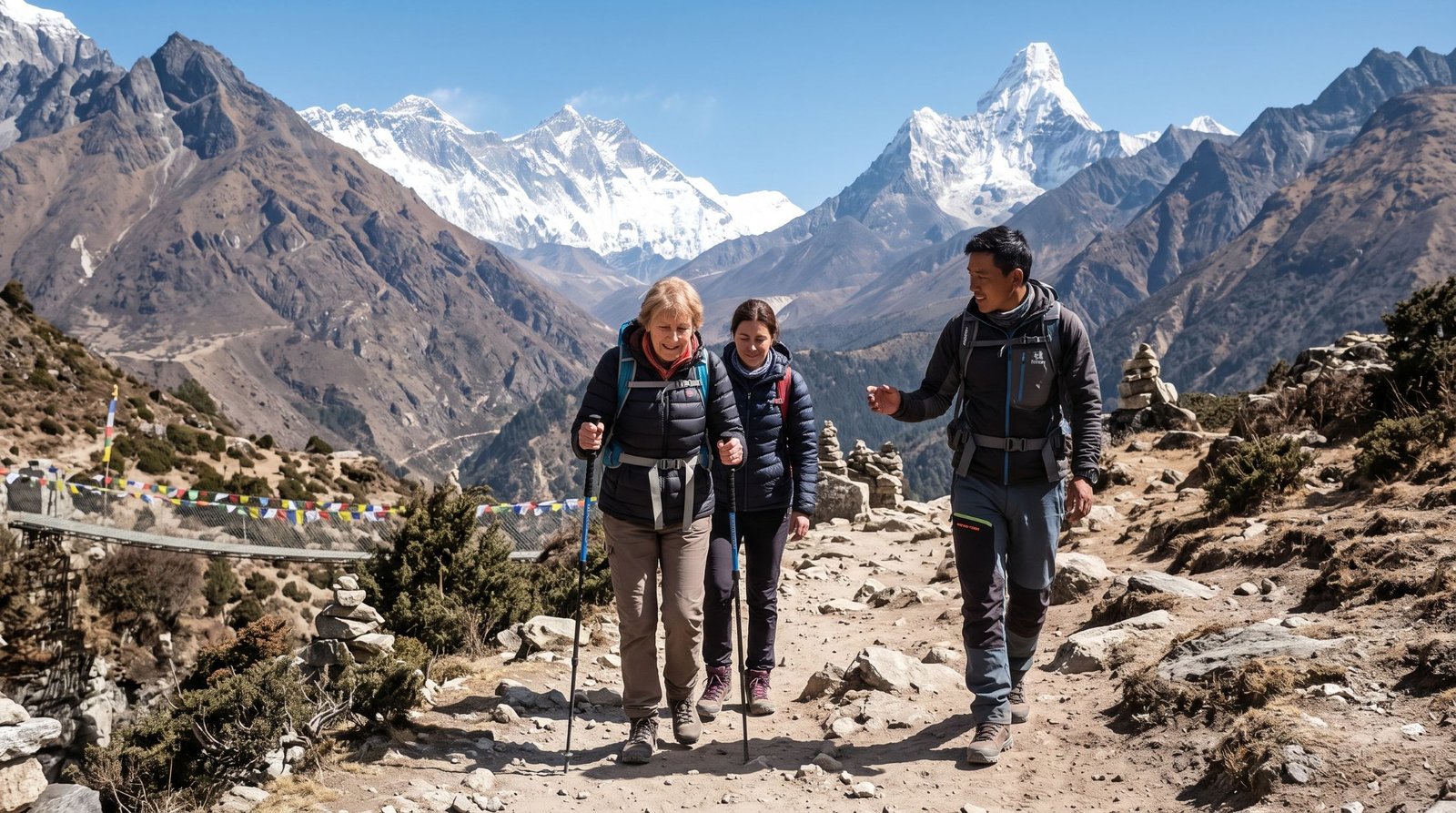
Turning 60 is one of life’s defining milestones. For many active adults, it marks a transition into retirement, newfound freedom, and a desire to achieve lifelong bucket-list goals. Among those dreams, standing at 5,364 meters (17,598 feet) at the foot of Mount Everest remains the pinnacle of adventure travel.
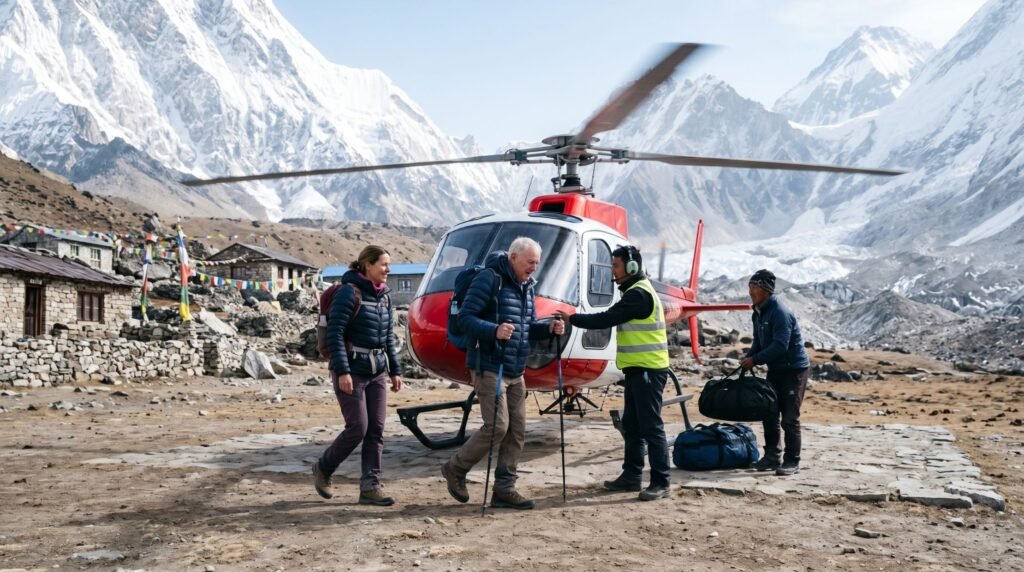
Yet, when mature hikers begin researching the journey, a persistent doubt frequently arises: “Am I too old for this? Can my heart, lungs, and knees still handle the Khumbu Valley?”
The short answer is an emphatic yes.
Every trekking season, hundreds of vibrant hikers in their 60s and 70s reach Everest Base Camp safely. In fact, veteran Himalayan guides often observe that mature trekkers have higher completion rates than hikers in their twenties.
Age brings emotional patience, mental resilience, and a disciplined approach to physical pacing—qualities that are far more valuable at high altitude than youthful speed.
However, trekking Everest Base Camp at 60 requires a smarter, more calculated strategy. From understanding cardiovascular adaptation and senior travel insurance exclusions to eliminating joint-damaging downhill trails, here is the complete medical, logistical, and safety guide for hikers over 60.
1. Is There an Official Age Limit for Trekking Everest Base Camp at 60 and Beyond?
A common question among inquiring seniors is whether the Nepalese government imposes legal restrictions on mature hikers.
- No Upper Age Limit for Trekking: Under the regulations of the Nepal Department of Tourism and Sagarmatha National Park, there is no maximum age limit for trekking to Everest Base Camp. While mountaineers attempting to summit the peak must be at least 16 years old, the trekking trail to Base Camp is open to all ages.
- Real-World Track Record: Active hikers in their late 60s and 70s complete the trek every year. In 2013, Japanese mountaineer Yuichiro Miura famously summited Everest at age 80, proving that cardiovascular capability at elevation is determined by preparation and conditioning rather than calendar years.
As long as you possess sound cardiovascular health, receive medical clearance from your personal physician, and adhere to conservative acclimatization pacing, trekking Everest Base Camp at 60 is a realistic and achievable goal.
2. The Medical Reality: How the 60+ Body Adapts to High Altitude
Understanding how your physiology responds to reduced barometric pressure helps eliminate anxiety and ensures safe mountain travel.
Arterial Oxygen and Acclimatization
At Everest Base Camp (5,364 m), atmospheric air still contains 21% oxygen, but the atmospheric pressure is roughly half of that at sea level. With every breath, your body takes in approximately 50% fewer oxygen molecules.
To compensate, the human body adapts by:
- Increasing resting breathing rate (hyperventilation) to pull in more oxygen.
- Elevating resting heart rate to circulate oxygenated blood more rapidly.
- Triggering the kidneys to release erythropoietin (EPO), stimulating the production of oxygen-carrying red blood cells.
Clinical studies in high-altitude medicine show that healthy adults over 60 acclimatize just as effectively as younger individuals. Age does not diminish your body’s ability to produce red blood cells or adapt to thinner air.
Managing Pre-Existing Conditions
Many healthy 60-year-olds manage common health parameters such as mild hypertension, cholesterol, or joint sensitivity. If you are preparing for trekking Everest Base Camp at 60, keep these medical principles in mind:
- Physician Consultation: Schedule a comprehensive checkup 8 to 12 weeks before departure. Inform your doctor of the maximum altitude (5,364 m at Base Camp and 5,545 m at Kala Patthar).
- Blood Pressure Medications: Most common antihypertensive medications (such as ACE inhibitors or ARBs) function normally at high elevation. Avoid starting new medications immediately before your trip.
- Diamox (Acetazolamide): This widely used, safe prescription medication stimulates nighttime breathing and accelerates natural acclimatization. Discuss with your physician whether carrying a prophylactic course of Diamox (125 mg twice daily) is appropriate for your profile.
3. Pacing and Physiology: Why Trekking Everest Base Camp at 60 Often Has Higher Success Rates
Younger hikers in their 20s often treat the trail as a physical race, charging up hills and spiking their heart rates into anaerobic thresholds. This depletes glycogen stores and significantly increases the incidence of Acute Mountain Sickness (AMS).
Mature adventurers have a natural tactical advantage when trekking Everest Base Camp at 60: emotional discipline.
The Principle of “Bistari, Bistari”
In Nepali, the golden rule of high altitude is “bistari, bistari”—slowly, slowly.
- The Aerobic Cadence: Your hiking pace should remain conversational at all times. If you are breathing too hard to speak a complete sentence without pausing, you are walking too fast.
- Rest Steps: Veteran mountaineers utilize the “rest step”—locking the trailing knee briefly on each stride to transfer body weight directly to the skeletal structure, giving the quadriceps a split-second rest between steps.
- Rest Days are Mandatory: A balanced itinerary must include two nights in Namche Bazaar (3,440 m) and two nights in Dingboche (4,410 m). Never book rushed 7-day walking itineraries that cut these critical safety days.
4. Daily Medical Monitoring: How Guides Protect Mature Trekkers
When you travel with a reputable company like Himalayan Walkers, health management is not left to guesswork.
Every morning before breakfast and every evening after dinner, your lead guide conducts a formal biometric check in the teahouse dining hall:
- Pulse Oximeter Saturation ($SpO_2$): A digital sensor placed on your finger reads the percentage of oxygen carried in your hemoglobin. While normal sea-level readings sit between 95% and 99%, readings naturally decline to 75%–85% above 4,500 meters. Consistent daily tracking allows guides to identify early trends before mild symptoms escalate.
- Resting Heart Rate: Measuring cardiovascular adaptation to elevation.
- The Lake Louise Scorecard: Guides monitor subjective indicators: headache, appetite loss, sleep quality, and fatigue levels.
- Emergency Oxygen: Our teams carry portable supplemental oxygen cylinders and comprehensive first-aid trauma kits throughout the trek.
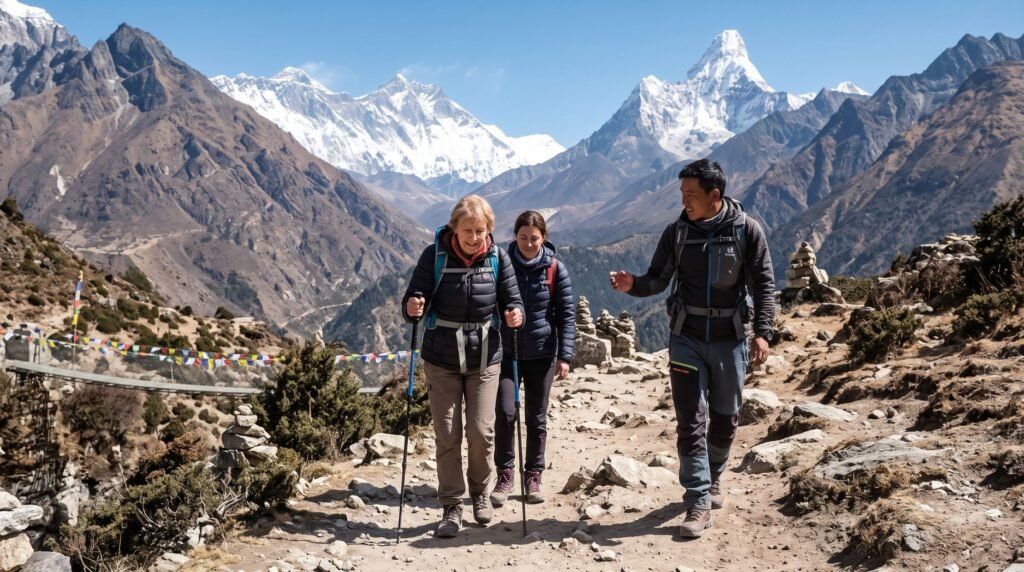
5. How the Helicopter Return Transforms Trekking Everest Base Camp at 60
For hikers over 60, the biggest physical obstacle is rarely the uphill walk—it is the knee-crushing downhill descent.
Walking uphill is primarily a cardiovascular exercise. Walking downhill, however, requires eccentric muscle contraction, where quadriceps must brake your body weight against gravity on every step. Biomechanical research indicates that descending steep, uneven stone steps exerts compressive forces equal to 3 to 4 times your body weight on each knee joint.
Over the 65-kilometer descent from Gorak Shep back to Lukla, this repetitive shock leads to acute patellofemoral inflammation, cartilage strain, and high fall risks for tired legs.
The Helicopter Return Solution
This is why our 10-Day Everest Base Camp Trek with Helicopter Return is the preferred itinerary for mature travelers:
- You Hike 100% of the Way Up: You climb every meter on foot from Lukla to Everest Base Camp (5,364 m) and Kala Patthar (5,545 m), earning the full lifetime achievement.
- You Skip 100% of the Downhill Strain: Instead of spending four painful days grinding your knees downhill, an Airbus H125 helicopter picks you up at the Gorak Shep helipad and flies you back to Kathmandu in under 60 minutes.
By eliminating the downhill descent, trekking Everest Base Camp at 60 preserves your joints, cuts fatigue, and finishes your adventure with a breathtaking aerial tour of Everest, Lhotse, and Ama Dablam.
6. Route Comparison: Classic Walking Trek vs. 10-Day Helicopter Return
| Trek Feature | Classic 14-Day Walking Trek | 10-Day EBC Trek with Helicopter Return |
|---|---|---|
| Total Distance Walked | ~130 km (80 miles) round trip | ~65 km (40 miles) uphill only |
| Downhill Impact on Joints | 4 days of punishing stone steps | Zero (Direct helicopter flight to Kathmandu) |
| Kala Patthar Sunrise (5,545 m) | Yes | Yes (Included on Day 10 morning) |
| Acclimatization Quality | 2 built-in rest days | 2 built-in rest days (Zero safety cuts) |
| Fatigue & Fall Risk | High on the late descent | Minimal (Rest immediately after summit) |
| Best Suited For | Young budget backpackers | Hikers over 60, retirees & joint-conscious adults |
7. Senior Travel Insurance: What You Must Know When Trekking Everest Base Camp at 60
One of the most overlooked hurdles when trekking Everest Base Camp at 60 is travel insurance.
Many standard international policies automatically reduce benefits, insert age caps, or exclude high-altitude trekking once a policyholder turns 60, 65, or 70.
Mandatory Insurance Checklist for Over-60s:
- Explicit High-Altitude Evacuation (Up to 6,000 meters): Standard policies often cap coverage at 3,000 or 4,000 meters. Your policy must state in writing that it covers trekking and emergency helicopter rescue up to 6,000 meters (20,000 feet).
- Pre-Existing Medical Condition Waivers: If you manage blood pressure or cholesterol with medication, verify that your policy includes coverage for stable pre-existing conditions.
- Recommended Senior-Friendly Providers:
- Global Rescue: Widely considered the gold standard for high-altitude medical evacuation, offering comprehensive memberships without age discrimination.
- World Nomads (Explorer Plan): Available for travelers up to age 69 in many countries (verify country-specific age tiers).
- Ripcord Rescue Travel Insurance: Comprehensive high-altitude evacuation coverage designed for remote expeditions.
8. Teahouse Comfort & Daily Logistics for Mature Travelers
At Himalayan Walkers, we recognize that small details make a tremendous difference in daily comfort for older travelers:
- Lower-Floor Rooms: After a 6-hour hike, climbing steep wooden teahouse stairs to a third-floor attic is the last thing your knees need. We prioritize booking private twin-share rooms on the ground or first floor.
- Porter Support: You carry only a lightweight daypack (3 to 4 kg) containing your water bottle, warm layers, camera, and personal medications. Our local porters transport your main duffel bag (up to 10 kg).
- Hot Water Bottles at Night: Teahouse bedrooms are unheated. Filling your metal water bottle with boiled water and slipping it into your -20°C sleeping bag provides consistent, soothing warmth for your feet and lower back throughout the sub-zero mountain night.
Frequently Asked Questions (FAQ)
What is the typical success rate for trekking Everest Base Camp at 60?
When following a conservative 10-day itinerary with full acclimatization in Namche Bazaar and Dingboche, mature hikers who maintain steady aerobic pacing achieve completion rates above 90%. Pacing slowly and staying well hydrated (3.5 to 4 liters of water daily) are the two greatest factors in success.
How should I train if I am over 60?
Begin training 10 to 12 weeks before departure. Focus on low-impact cardiovascular conditioning: incline treadmill walking, stair climbing, elliptical training, and outdoor hill walks with a weighted daypack. Incorporate bodyweight exercises like step-ups, wall sits, and calf raises to strengthen joint-stabilizing muscles around the knees and hips.
What happens if I feel unwell above 4,000 meters?
If your oxygen saturation drops significantly or your guide identifies early symptoms of mountain sickness, you will stop ascending. If rest does not resolve symptoms, you will be escorted down to a lower elevation immediately. If emergency care is necessary, our Kathmandu operations desk initiates immediate helicopter medical evacuation.
Celebrate Your 60s at the Top of the World
Age is not a barrier to standing before the world’s greatest peaks—it is a perspective that enriches every step of the journey. By combining a slow, respectful ascent with the comfort and knee-saving safety of an aerial descent, reaching Everest Base Camp is well within your grasp.
Explore our fully supported 10-Day Everest Base Camp Trek with Helicopter Return package and begin preparing for your Himalayan milestone with confidence.

