

For millions of outdoor enthusiasts across the United States, trekking to the base of Mount Everest sits firmly at the top of the lifetime bucket list.
Yet, for corporate professionals, engineers, healthcare workers, and entrepreneurs, the biggest barrier to the Himalayas has rarely been physical fitness or financial cost.
The primary obstacle is PTO (Paid Time Off).
In corporate America, where annual vacation allowances typically range between two and three weeks (10 to 15 days), committing to a traditional 16-to-18-day door-to-door expedition is practically impossible.
Burning an entire year’s worth of hard-earned leave on a single journey forces most working professionals to relegate Everest to their distant retirement years.
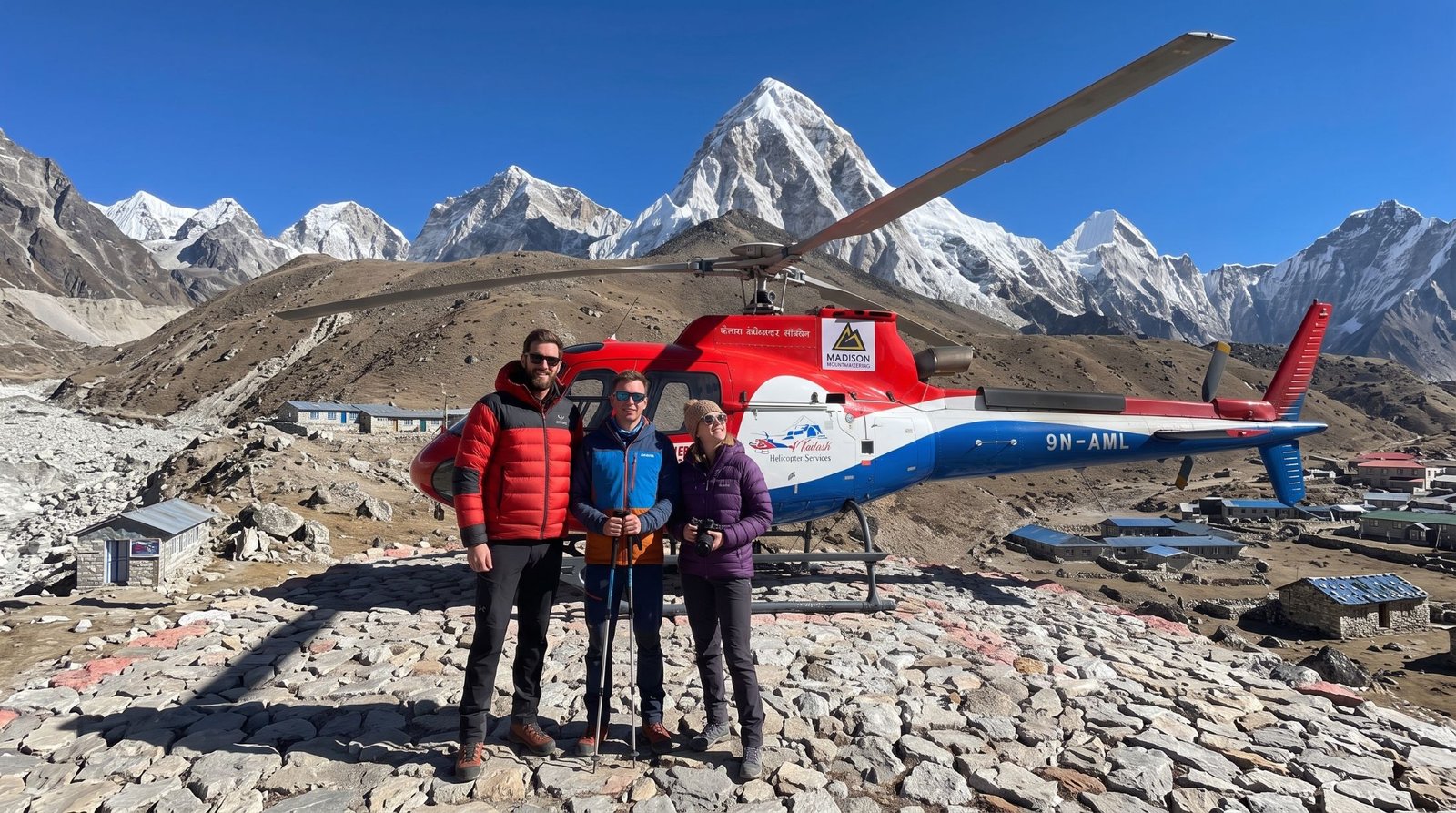
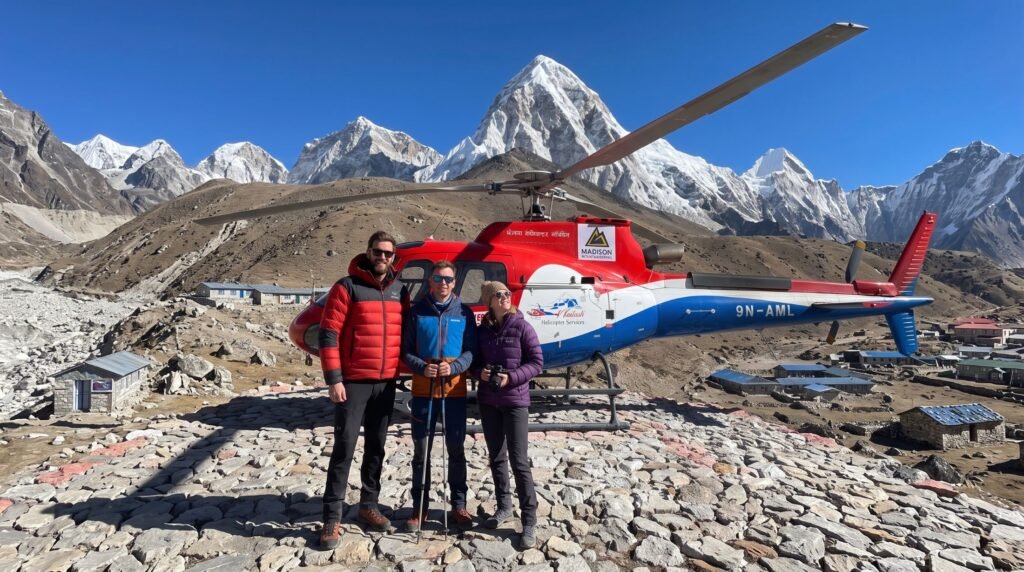
Fortunately, modern high-altitude logistics have changed the equation. By pairing a classic on-foot ascent with a direct aerial helicopter descent, a 10 day Everest Base Camp trek enables US-based travelers to complete the world’s most iconic trek while taking as few as 5 to 7 business days off work.
This guide details the strategic vacation math, US flight routing, jet lag recovery, and trail logistics required to conquer Mount Everest within a standard American holiday window.
1. The PTO Math: How a 10 Day Everest Base Camp Trek Fits into US Work Schedules
The key to completing an international expedition within a standard American vacation allowance is weekend stacking—sandwiching your travel days across two weekends and leveraging federal holidays.
Because Nepal operates on Nepal Time (GMT +5:45)—roughly 9 hours and 45 minutes ahead of US Eastern Time (ET) and 12 hours and 45 minutes ahead of Pacific Time (PT)—traveling eastward crosses the International Date Line. However, returning westward gives you that time back.
The Standard 9-Day PTO Template (5 Days of Leave)
- Friday Evening: Depart the US (JFK, ORD, DFW, SFO, or LAX) on an overnight red-eye flight.
- Sunday Afternoon (Day 1): Land in Kathmandu, meet your guide, and conduct your pre-trek briefing.
- Monday to following Tuesday (Days 2 to 9): Complete the ascent, stand at Everest Base Camp (5,364 m), climb Kala Patthar (5,545 m), and board your helicopter back to Kathmandu.
- Wednesday / Thursday (Day 10): Fly home from Kathmandu, crossing back across time zones to arrive in the US on the same calendar day.
- Total Business Days Burned: Only 5 to 7 days of PTO.
The Holiday Multiplier: Doing EBC on 3 Days of PTO
If you align your trek with major US federal holidays, your vacation efficiency doubles:
- Thanksgiving Week: Take Monday through Wednesday off (3 days of PTO), utilize Thursday and Friday as paid company holidays, and combine them with two full weekends to generate a continuous 10-to-11-day travel window.
- Memorial Day / Labor Day: Stack the Monday federal holiday with 4 days of PTO to secure a 9-day trekking window.
2. Flight Routes from the US: Getting to Kathmandu Efficiently
When planning a 10 day Everest Base Camp trek, minimizing flight transit time is essential to avoid starting your trek in a state of sleep deprivation. Several top-tier airlines offer streamlined one-stop connections between major US hubs and Tribhuvan International Airport (KTM) in Kathmandu:
| Airline | Common US Departure Gateways | Layover Hub | Average Total Transit Time |
|---|---|---|---|
| Qatar Airways | JFK, BOS, ORD, IAH, DFW, SFO, LAX, SEA | Doha (DOH) | 19 to 23 hours |
| Emirates / Flydubai | JFK, EWR, ORD, IAH, SFO, LAX, MCO | Dubai (DXB) | 20 to 24 hours |
| Turkish Airlines | JFK, IAD, ORD, MIA, ATL, SFO, LAX | Istanbul (IST) | 21 to 25 hours |
| Singapore Airlines | SFO, LAX, SEA, JFK | Singapore (SIN) | 24 to 28 hours (Best for West Coast) |
Actionable Tip for Overcoming Jet Lag
Board your US flight and immediately set your watch to Nepal Time. Sleep during what would be nighttime in Kathmandu. Stay well hydrated, avoid alcohol in transit, and consider taking a low dose (3 to 5 mg) of melatonin upon landing in Kathmandu to reset your circadian rhythm before boarding your domestic mountain flight to Lukla.
3. How a 10 Day Everest Base Camp Trek Protects Acclimatization Safety
A common concern among analytical professionals is whether a condensed schedule increases the risk of Acute Mountain Sickness (AMS).
It is vital to distinguish between a safe helicopter-return trek and an unsafe rushed walking trek:
On our 10-day Everest Base Camp Trek with Helicopter Return, the climbing profile is 100% identical to classic 14-day expeditions:
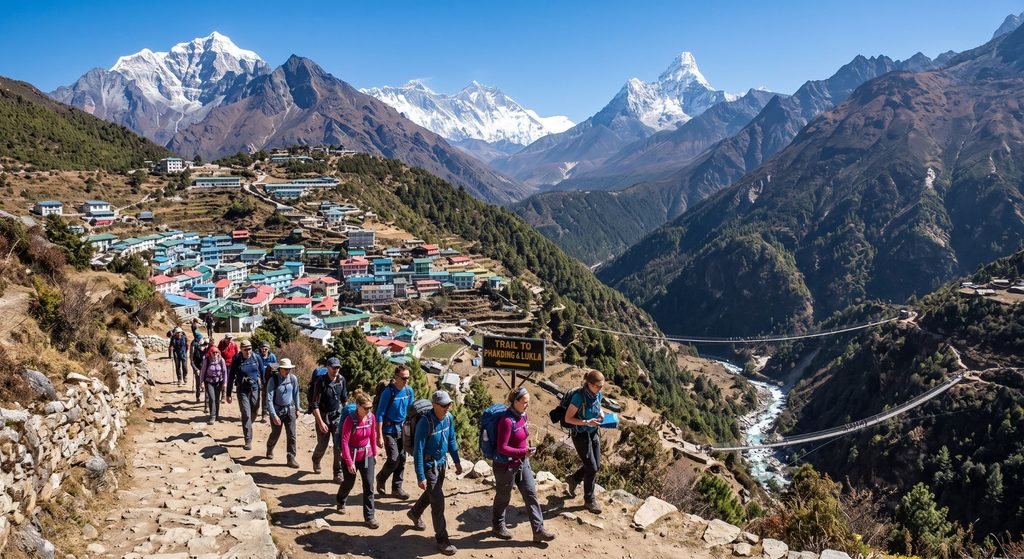
- You Still Ascend Slowly: You spend two full nights in the Sherpa capital of Namche Bazaar (3,440 m) with an active acclimatization hike to Hotel Everest View (3,880 m).
- You Still Rest at High Altitude: You spend two nights in the alpine village of Dingboche (4,410 m) to let your red blood cells adapt before moving past 4,900 meters.
- You Still Climb Kala Patthar: You reach the 5,545-meter summit of Kala Patthar at sunrise to witness the legendary panoramic view of Mount Everest’s peak.
The time savings on a 10 day Everest Base Camp trek do not come from skipping rest days on the way up. They are achieved entirely by eliminating the repetitive, knee-straining 4-day march back down the mountain.
Once you reach Base Camp and Kala Patthar, a helicopter picks you up at Gorak Shep (5,140 m) and flies you back to Kathmandu in under 60 minutes.
4. Comparing Itineraries: Classic 14-Day vs. 10-Day Helicopter Return
| Factor | Classic 14-Day Walking Trek | 10 Day Everest Base Camp Trek |
|---|---|---|
| US PTO Required | 12 to 14 Business Days (~3 weeks off) | 5 to 7 Business Days (~1.5 weeks off) |
| Trail Distance Walked | ~130 km (80 miles) round trip | ~65 km (40 miles) ascent only |
| Downhill Impact on Knees | High (4 consecutive days of descent) | Zero (Replaced by scenic aerial flight) |
| Acclimatization Quality | 2 built-in rest days | 2 built-in rest days (Zero safety cuts) |
| Aerial Himalayan Views | None (Commercial twin-engine flight only) | Included (Direct helicopter flight over Khumbu) |
| Best Suited For | College students & gap-year travelers | Working US professionals, couples & executives |
5. Staying Connected: Wi-Fi, eSIMs, and Corporate Realities
While the goal of any Himalayan trek is to disconnect from corporate stress, modern executives often cannot disappear entirely off the grid. If you need to monitor critical work emails or check in with family in the States, connectivity in the Khumbu region is surprisingly viable:
- Local Cellular Data (eSIM / Physical SIM): You can install an Airlo eSIM or purchase a local Ncell SIM card at Kathmandu airport. High-speed 4G data is generally available from Lukla up through Namche Bazaar and Tengboche.
- Everest Link Wi-Fi Cards: Above Dingboche (where cellular coverage fades), teahouses utilize Everest Link, a dedicated satellite Wi-Fi network. You can purchase pre-paid scratch cards in the teahouse dining halls ($5 to $10 for 10–20 GB), providing sufficient bandwidth for messaging, email, and basic web browsing.
- Device Power: Cold mountain air rapidly depletes lithium-ion batteries. Bring a high-capacity 20,000mAh external power bank and keep your phone and power bank inside your sleeping bag at night to preserve battery life.
6. Training for EBC on a 40-to-60 Hour Work Week
You do not need to quit your corporate job to get in peak trekking condition. If you work long hours at a desk, focus on high-efficiency, functional cardiovascular conditioning for 8 to 10 weeks prior to departure:
- Incline Treadmill Hiking: Set the gym treadmill to a 12–15% incline at 2.5 to 3.0 mph. Walk for 45 minutes, three to four times a week, wearing a 15-pound backpack. This directly replicates the continuous cardiovascular demand of the Everest trail.
- Stair Climber Intervals: Spend 20 to 30 minutes on the StairMaster at a steady cadence. Focus on posture and driving through your heels to strengthen your glutes and calves.
- Weekend Ruck Marches: On Saturday or Sunday, complete an outdoor trail hike covering 5 to 8 miles with a weighted daypack to break in your trekking boots and condition your joints.
7. Gear Logistics for US Trekkers: What to Buy vs. Rent in Kathmandu
Many American hikers overspend thousands of dollars at stores like REI before leaving the US, only to struggle with international airline baggage allowances on their flights to Nepal.
When booking a 10 day Everest Base Camp trek with Himalayan Walkers, simplify your packing strategy:
- What to Buy in the US (Bring from Home): Your broken-in hiking boots, moisture-wicking merino wool base layers, polarized sunglasses (Category 3 or 4 UV protection), and your favorite personal daypack (25–35L).
- What Himalayan Walkers Provides: A heavy-duty, weather-resistant duffel bag (carried by your porter) and all group medical equipment (emergency oxygen and pulse oximeters).
- What to Rent in Kathmandu for ~$1.50/day: Heavy expedition down jackets (-20°C rated) and four-season sleeping bags can be rented affordably in Thamel upon arrival, saving immense space in your transatlantic luggage.
Frequently Asked Questions (FAQ)
How many total days away from the US do I need for a 10 day Everest Base Camp trek?
Accounting for the transatlantic flight from the US and the return journey across the International Date Line, plan for 12 to 13 total calendar days door-to-door. By departing on a Friday evening and returning on a following Friday or weekend, you only use 5 to 7 days of official corporate PTO.
Can I fly directly from the US and start trekking the next morning?
We strongly advise having at least one full day in Kathmandu before flying to Lukla. Our 10-day itinerary includes Day 2 for rest, gear checks, UNESCO cultural sightseeing, and adjusting to the time zone difference. Jumping into a high-altitude trek directly off a 24-hour flight significantly increases the risk of early altitude fatigue.
What happens to my city luggage during the trek?
You do not carry your suitcases into the mountains. During your pre-trek briefing in Kathmandu, you pack only your trekking gear into the company duffel bag (up to 10 kg carried by porters). Your rolling suitcases, formal clothing, and non-essential travel gear remain securely locked in our Kathmandu office storage room free of charge until you return.
What travel insurance do American citizens need?
You must purchase travel insurance that explicitly covers unlimited medical evacuation and search-and-rescue up to 6,000 meters (20,000 feet). Providers like Global Rescue, World Nomads (Explorer Plan), and Ripcord Rescue Travel Insurance are widely recognized and recommended for US trekkers in Nepal.
Don’t Postpone the Himalayas Until Retirement
You do not need to put your life on hold or exhaust an entire year of personal leave to stand beneath Mount Everest. With modern flight connections and a well-engineered helicopter return, conquering Base Camp is completely achievable within your standard vacation schedule.
Discover our fully supported 10-Day Everest Base Camp Trek with Helicopter Return package—complete with guaranteed departures, licensed local Sherpa guides, seamless airport logistics, and transparent pricing.

